
24/7 Commercial Solar & BESS Emergency Dispatch: If your utility-scale solar generating facility, commercial rooftop PV array, central inverter room, or containerized Battery Energy Storage System (BESS) in Greater Phoenix faces desert flash-flooding, medium-voltage cable trench silt inundation, chiller loop rupture, or electrical water intrusion, contact our high-voltage industrial restoration division immediately at (602) 587-1380. Phoenix Damage Pros deploys NFPA 855 and NFPA 70E certified disaster mobilization units, trailer-mounted industrial desiccant dehumidifiers, non-conductive dielectric cleaning apparatus, and heavy vacuum silt extraction rigs with a guaranteed 45-minute on-site response window across Phoenix, Scottsdale, Tempe, Mesa, Chandler, Glendale, Gilbert, Peoria, Tolleson, Buckeye, and Goodyear. Licensed Arizona Commercial General Contractor AZ ROC #342819.
Across Greater Phoenix and the Sonoran Desert basin, commercial photovoltaic installations and containerized Battery Energy Storage Systems (BESS) power critical regional infrastructure. These installations rely on sophisticated power electronics: 1,500V DC central megawatt inverters, lithium iron phosphate (LFP) battery racks, DC combiner switchgear, and subterranean medium-voltage cable trenches. When desert monsoon microbursts, flash floods, or chilled-water line failures breach these electrical enclosures, the incident becomes an acute high-voltage emergency. Conductive floodwaters trigger arc flash explosions, catastrophic stranded energy discharge, electrolytic busbar corrosion, and thermal runaway. Mitigating these mission-critical facilities requires advanced psychrometric engineering, strict compliance with NFPA 855, NFPA 70E, and IEEE 1547, and precision dielectric dewatering delivered by Phoenix Damage Pros.
Comprehensive Master Title & Commercial Overview: Commercial Solar Inverter Room Water Damage Restoration Phoenix AZ
The Greater Phoenix metropolitan area is an international capital for utility-scale solar power generation and industrial Battery Energy Storage Systems (BESS). Driven by intense Sonoran solar irradiance exceeding 6.5 peak sun hours daily, Maricopa County hosts extensive utility solar fields in Buckeye, Arlington, and Gila Bend, alongside multi-megawatt commercial rooftop installations across industrial distribution centers in Tolleson, Goodyear, and Glendale. Furthermore, advanced semiconductor manufacturing corridors and hyperscale data centers throughout Chandler, Mesa, and Phoenix rely on massive containerized stationary storage plants for peak shaving, voltage stability, and emergency backup power.
Despite the hyper-arid Sonoran climate, renewable energy facilities face severe hydrological vulnerabilities. The summer monsoon season brings violent microbursts and intense rainfall exceeding two inches per hour. When high-velocity stormwater sweeps over low-permeability desert caliche soils, sudden flash floods inundate ground-mount inverter skids, electrical switchgear yards, and subterranean cable trenches. Simultaneously, rooftop commercial PV arrays face severe interior inverter room flooding when roof drains and scuppers clog with blown dust, forcing backed-up stormwater through conduits, parapet flashings, and mechanical mezzanines into sensitive electrical gear.
Water intrusion into high-voltage renewable infrastructure creates catastrophic operational hazards. Solar power plants operate with DC string voltages reaching 1,500V DC, stepping up through medium-voltage AC transformers (12.47 kV to 34.5 kV). Conductive floodwaters carrying dissolved desert salts breach busbar phase spacing, triggering massive phase-to-phase arc flash events, destructive short circuits, and sudden grid trips. In BESS enclosures, water submersion of lithium iron phosphate (LFP) battery racks creates perilous stranded energy conditions, where submerged cells undergo continuous electrolysis, releasing explosive hydrogen gas and risking thermal runaway.
Phoenix Damage Pros provides specialized, engineering-grade industrial restoration engineered for solar generation plants and BESS facilities across Greater Phoenix. Operating under Arizona Commercial Contracting License AZ ROC #342819 and headquartered at 2415 E Camelback Rd, Suite 400, Phoenix, AZ 85016, our commercial disaster division guarantees an emergency 45-minute mobilization window across Maricopa County. Our team includes high-voltage certified specialists, electrical safety officers, and IICRC-certified Commercial Drying Specialists. Supported by trailer-mounted industrial desiccant fleets, non-conductive dielectric flush equipment, and heavy vacuum slurry extraction units, our 24/7 command center is accessible immediately at (602) 587-1380.
Facility Architectural Vulnerabilities, Structural Substrates & Inundation Mechanics
Utility-scale solar power stations, central inverter enclosures, and containerized BESS installations are designed to withstand extreme desert heat and dust storms. However, their structural configurations incorporate distinct vulnerabilities that make them susceptible to flash-flood inundation, conductive silt sedimentation, and trapped moisture during severe weather events.
The most pervasive structural vulnerability across commercial solar sites is the subterranean medium-voltage and DC cable trench network. Inverter skids interface with below-grade concrete or polymer cable trenches carrying 1,500V DC feeders, 34.5 kV collection cables, and SCADA communication fibers. Graded desert terrain often channels storm runoff directly toward these raceways. Floodwaters laden with caliche silt, clay, and alkaline salts pour into trench entry points, submerging raceways and flowing upward into cabinet bases. Once inside, conductive silt coats cable terminations, busbars, and switchgear, establishing persistent leakage current paths and severe grounding faults.
A second vulnerability involves containerized BESS enclosures (such as Tesla Megapacks, Fluence, Powin, and Sungrow power blocks). To manage internal temperatures in extreme Phoenix summer heat exceeding 115°F, these ISO-style enclosures feature high-volume HVAC louvers, liquid chiller circuits, and blast-relief dampers. During monsoon storms, 60+ MPH winds drive torrential rain through ventilation louvers. Concurrently, internal liquid-cooling loops can burst under thermal or pressure stress, releasing hundreds of gallons of glycol fluid into the sealed enclosure. Because BESS floors lack gravity floor drains to preserve thermal envelopes, water pools rapidly, submerging bottom battery module tiers, BMS wiring harnesses, and DC contactors.
Commercial rooftop solar inverter rooms introduce unique architectural risks. Large distribution facilities locate string inverters inside rooftop penthouses or electrical mezzanines. Monsoonal dust storms deposit grit into scupper boxes and roof drains; subsequent downpours cause roof ponding. Hydrostatic head pressure forces water through conduit penetrations and roof membrane flashings. Water funnels through internal electrical conduits, pouring directly into the top of central inverters, main distribution switchboards, and isolation transformers, causing catastrophic short-circuit flashovers.
Finally, reinforced concrete equipment pads act as continuous moisture reservoirs. Heavy concrete slabs support central inverters and step-up transformers. When submerged, porous concrete absorbs hundreds of gallons of water through capillary pores. Following surface dewatering, trapped slab moisture evaporates into sealed inverter enclosures under solar radiation, creating internal relative humidity spikes (>90% RH). This vapor off-gassing causes rapid copper busbar oxidation, PCB trace corrosion, and continuous ground-fault leakage errors that block utility grid re-synchronization.
Core Machinery, Electrical & Specialized Mechanical System Dewatering
The electromechanical core of a commercial solar plant and BESS facility represents millions of dollars in precision power conversion and storage assets. A central inverter room houses insulated-gate bipolar transistor (IGBT) bridge modules, high-speed DC disconnect switches, magnetic reactors, cooling heat exchangers, and sensitive microprocessor control cards. Moisture intrusion and mineral deposits can permanently ruin these components. Phoenix Damage Pros enforces an exhaustive electromechanical dewatering and salvage protocol engineered specifically for high-voltage renewable generation assets.
Megawatt central inverters (such as SMA Sunny Central, Sungrow SG, and Schneider Electric units) convert 1,500V DC solar array power into three-phase AC electricity. Inundation deposits conductive mineral salts across busbar insulators, pulse-width modulation (PWM) control circuitry, and IGBT driver boards. Phoenix Damage Pros executes strict OSHA Lockout/Tagout (LOTO) protocols, confirming zero-energy state with calibrated CAT IV 1000V / CAT III 1500V instruments. Technicians utilize non-conductive pneumatic extractors to clear cabinet sumps, followed by micro-flushing laminated busbar stacks, gate drivers, and printed circuit boards using zero-residue, fast-evaporating dielectric solvents with breakdown ratings exceeding 35 kV, eliminating conductive mineral bridges.
Stationary BESS racks require rigorous dewatering protocols. Modern utility BESS installations house modular racks of lithium iron phosphate (LFP) or nickel manganese cobalt (NMC) cells operating between 800V and 1,500V DC. Submersion of lower rack tiers causes localized electrolysis, creating explosive hydrogen gas and cell degradation. Phoenix Damage Pros deploys NFPA 70E certified personnel utilizing Class 4 insulated safety tools to dewater battery bays without mechanical contact. High-velocity desiccant process air is channeled through battery frames, halting galvanic corrosion on terminal lugs and BMS circuit interfaces.
Subterranean cable trenches require specialized slurry extraction. Medium-voltage cables (15 kV to 35 kV) submerged in standing water suffer from water treeing—an electrochemical degradation within XLPE or EPR insulation that causes catastrophic dielectric blowout upon re-energization. Phoenix Damage Pros deploys high-volume vacuum recovery units to evacuate caliche silt slurry, flushes cable jackets with deionized water, and establishes continuous dry-air purging through conduit banks using desiccant drying arrays delivering dew points below -40°F.
DC combiner boxes and array switchgear undergo complete technical salvage. Inundated string combiner boxes contain string monitoring boards, 1,500V DC fuses, and surge protection devices (SPDs). Saturated fuses and arrestors lose arc-quenching capability. Phoenix Damage Pros tests fuse assemblies, replaces compromised surge modules, cleans terminal blocks with dielectric solvents, and verifies that SCADA fiber-optic and RS-485 communication circuits are desiccated and functioning at full signal integrity.
Specialized Environmental & Regulatory Containment Standards: NFPA 855, NFPA 70E, OSHA 29 CFR 1910.269 & IEEE 1547
Restoring a commercial solar plant or stationary BESS following water damage requires absolute compliance with federal safety regulations and utility interconnection mandates. High-voltage energy facilities are classified as electric power generation environments governed by strict fire codes, worker protection standards, and grid reliability rules. Non-compliance risks catastrophic arc explosions, massive OSHA citations, and permanent disconnection by utilities such as Arizona Public Service (APS) or Salt River Project (SRP). Phoenix Damage Pros maintains strict alignment with four essential regulatory frameworks.
The primary governing standard for energy storage is NFPA 855 (Standard for the Installation of Stationary Energy Storage Systems). NFPA 855 regulates hazard mitigation, fire protection, and post-incident recovery for BESS facilities. Under NFPA 855 Chapter 4, water intrusion affecting battery modules, battery management systems, or deflagration venting requires immediate physical isolation, thermal hazard monitoring, and an engineering safety assessment before personnel entry. Phoenix Damage Pros establishes an NFPA 855 compliant hazard boundary, monitors cell temperatures with radiometric thermography to detect latent exothermic runaway, and coordinates with local Maricopa County hazmat authorities.
Electrical worker safety is mandated by NFPA 70E (Standard for Electrical Safety in the Workplace) and OSHA 29 CFR 1910.269 (Electric Power Generation, Transmission, and Distribution). In flooded 1,500V DC central inverter rooms or BESS enclosures, arc flash boundaries often exceed 25 feet, with incident energy levels exceeding 40 cal/cm² (Category 4 Arc Flash). Phoenix Damage Pros enforces rigorous safety protocols:
- Verified Lockout/Tagout (LOTO): Comprehensive isolation of incoming DC PV array feeders, medium-voltage AC grid interconnects, auxiliary power feeds, and UPS circuits prior to physical intervention.
- Calibrated Zero-Energy Testing: Utilizing certified high-voltage proximity detectors and direct-contact multimeters rated CAT IV 1000V / CAT III 1500V to confirm complete de-energization across all busbars, capacitors, and switches.
- NFPA 70E Arc Flash PPE Deployment: Technicians wear 40 cal/cm² arc-rated flash suits, hoods with arc-rated face shields, ASTM D120 Class 0 through Class 4 rubber insulating gloves with leather protectors, and dielectric footwear.
- Electrically Safe Work Conditions (ESWC): Installing temporary portable grounding clusters on AC busbars and medium-voltage feeders to dissipate induced voltages from adjacent energized solar arrays.
Furthermore, all restoration procedures must satisfy IEEE 1547 (Standard for Interconnection and Interoperability of Distributed Energy Resources with Associated Electric Power Systems Interfaces). IEEE 1547 governs grid synchronization, power quality, and anti-islanding. Inundated inverters with moisture-degraded harmonic filter capacitors or corrupted control circuitry inject harmful harmonics into the electrical grid. Re-energizing without certified dielectric restoration violates utility interconnection agreements, prompting immediate disconnection. Phoenix Damage Pros provides certified Megger insulation resistance test logs and total harmonic distortion (THD) baseline reports confirming dielectric integrity prior to APS or SRP utility re-synchronization.
Finally, environmental regulations enforced by the Arizona Department of Environmental Quality (ADEQ) regulate industrial wastewater extraction. Floodwaters from inverter pads contain transformer oils, synthetic esters, and glycol thermal coolants. Discharging this effluent onto desert ground violates the Clean Water Act. Phoenix Damage Pros deploys closed-loop recovery matrices with oil-water separators, containerizing chemical waste in certified UN-rated drums for licensed disposal.
Hazardous Materials, Secondary Effluent, Stranded Energy & Chemical Disinfection Protocols
Water intrusion inside commercial solar and BESS facilities creates a hazardous convergence of electrical, chemical, and physical perils. High-voltage energy plants present severe life-safety threats driven by stranded electrical energy, toxic electrolyte gas release, hazardous thermal coolants, and abrasive Sonoran caliche silt.
The most acute hazard is Stranded Electrical Energy. In a stationary BESS, battery cells are active energy sources that cannot be switched off with a standard breaker. When 800V–1,500V DC battery module racks are submerged, internal stored energy remains live. Conductive water bridging battery terminals causes continuous electrolysis, producing explosive hydrogen ($H_2$) gas and generating intense localized heating. Cell casing breaches can initiate self-sustaining thermal runaway. Phoenix Damage Pros mitigates stranded energy hazards through systematic controls:
- Atmospheric & Lower Explosive Limit (LEL) Monitoring: Continuous telemetry monitoring of % LEL ($H_2$), oxygen ($O_2$), carbon monoxide ($CO$), and volatile organic compounds ($VOCs$) within the BESS enclosure before and during work.
- Hydrogen Fluoride (HF) Gas Surveillance: Saturated or thermally stressed lithium cells release toxic, corrosive hydrogen fluoride ($HF$) gas. Technicians utilize Level B respirators and calibrated electrochemical HF sensors, running high-volume air scrubbers to neutralize hazardous fumes.
- Insulated Manual String De-Energization: Technicians utilizing Class 4 insulated hot sticks systematically disconnect module-level manual service disconnect (MSD) plugs, breaking 1,500V DC strings down into low-voltage segments (<50V DC) that cannot sustain lethal arcs or self-driven electrolysis.
A second major hazard involves secondary chemical effluent. Modern central inverters and BESS enclosures utilize closed-loop liquid cooling circulating hundreds of gallons of ethylene or propylene glycol mixed with corrosion inhibitors. Flooding often fractures low-lying radiator pipes, blending glycol with floodwater, lithium electrolyte salts (such as $LiPF_6$), and copper corrosion residues. This chemical effluent is toxic, highly conductive, and corrosive to switchgear. Phoenix Damage Pros deploys chemical-resistant pumps to extract effluent into sealed UN-rated drums, followed by surface neutralization with specialized non-reactive buffering agents.
A third contaminant is Sonoran caliche silt. Floodwaters across Greater Phoenix carry immense concentrations of suspended calcium carbonate ($CaCO_3$) and alkali salts. Inverter cabinets and cable trenches accumulate thick mud deposits that dry into rock-hard conductive crusts. Phoenix Damage Pros uses a three-stage decontamination protocol: bulk slurry pneumatic hydro-extraction, non-conductive dry-ice ($CO_2$) pellet micro-blasting to remove hardened caliche without moisture or abrasion, and ultrasonic solvent cleaning of removable electronic cards using zero-residue dielectric agents.
Finally, environmental sanitization avoids aqueous chemicals near electrical gear. For concrete foundations and cable trench masonry, Phoenix Damage Pros applies non-conductive, EPA-registered sporicidal disinfectants via ultra-low-volume (ULV) dry fogging, preventing fungal growth without introducing liquid moisture into high-voltage switchgear.
Deep Psychrometric Engineering: Industrial Desiccant Fleets, High-Voltage Enclosure Purging & Sub-Surface Cable Trench Extraction
Drying flooded commercial solar central inverter rooms, BESS containers, and high-voltage cable vaults in the extreme meteorological climate of Greater Phoenix requires rigorous thermodynamic engineering. In Maricopa County, summer temperatures reach 115°F, but flooded subterranean trenches and sealed enclosures experience relative humidity spikes exceeding 95% RH. Under these conditions, conventional Low-Grain Refrigerant (LGR) dehumidifiers fail; cooling coils suffer thermal overload and cannot reduce humidity ratios to the ultra-dry levels required to prevent electrical flashover. Phoenix Damage Pros deploys industrial solid-rotor desiccant dehumidifiers to execute deep psychrometric moisture extraction.
Our industrial desiccant fleets utilize titanium-enhanced silica gel honeycomb adsorption rotors to extract moisture directly from process air at the molecular level. Operating independently of ambient temperatures, these systems deliver continuous air streams with humidity ratios below 10 grains per pound (GPP) and relative humidity below 5% RH, creating an immense vapor pressure differential that desorbs deep moisture from concrete slabs and electrical assemblies.
Our industrial drying protocols are engineered and verified using precise thermodynamic equations:
- Saturated & Actual Vapor Pressure Calculations (Magnus-Tetens Equation): Moisture vaporization from wet concrete and electrical insulation is driven by the vapor pressure gradient ($Delta VP$) between the wet material and process air. Saturated vapor pressure ($VP_{sat}$) in kPa is calculated from surface temperature ($T$ in °C):
$$VP_{sat}=0.61078timesexp((17.27times T)/(T+237.3))text{ kPa}$$
Actual vapor pressure ($VP_{air}$) is calculated using ambient dry-bulb temperature ($T_{air}$) and relative humidity ($RH$):$$VP_{air}=VP_{sat}(T_{air})times(RH/100)$$
- Vapor Pressure Differential Gradient ($Delta VP$): Moisture desorption requires a strong positive gradient:
$$Delta VP=VP_{substrate}-VP_{air}$$
In a flooded inverter room at 85°F (29.4°C) and 90% RH, $VP_{air}$ is 3.69 kPa, halting evaporation. Phoenix Damage Pros delivers desiccant air at 85°F and 5% RH, dropping $VP_{air}$ to 0.20 kPa. This creates a massive gradient ($Delta VP > 3.4 text{ kPa}$) that rapidly draws bound water from concrete equipment pads and electrical windings. - Humidity Ratio / Grains Per Pound (GPP) Formula: Absolute moisture mass per pound of dry air is tracked across all enclosures using absolute humidity metrics:
$$GPP=7000times((0.62198times VP_{air})/(P_{atm}-VP_{air}))$$
where $P_{atm}$ is local barometric pressure in Maricopa County. Our drying arrays maintain ambient enclosure air below 20 GPP and deliver direct desiccant supply air below 10 GPP. - Dew Point Suppression & Condensation Flashover Prevention (Arden Buck Equation): To ensure moisture cannot condense on high-voltage busbars and trigger dielectric flashover, dew point temperature ($T_{dp}$) is continuously calculated:
$$gamma(T,RH)=(17.27times T)/(237.7+T)+ln(RH/100)$$
$$T_{dp}=(237.7timesgamma(T,RH))/(17.27-gamma(T,RH))text{ }[^circtext{C}]$$
Phoenix Damage Pros suppresses the enclosure dew point below 25°F (-3.9°C)—far below the surface temperature of electrical busbars—eliminating any possibility of condensation flashover. - Engineered Enclosure Purging Airflow (CFM) Calculation: Process airflow volume is determined by enclosure volume ($V$ in cubic feet) and required Air Changes per Hour ($ACH$, typically 12 to 18 ACH for electrical desiccation):
$$CFM=(Vtimes ACH)/60$$
For a 40-foot central inverter or BESS container ($V = 3,800 text{ cu. ft.}$) operating at 15 ACH:$$CFM=(3,800times 15)/60=950text{ CFM}$$
Phoenix Damage Pros deploys an industrial 1,500 CFM desiccant dehumidifier, delivering positive-pressure dry air directly into the container while exhausting reactivation moisture outdoors. - Sub-Surface Cable Trench Negative-Pressure Extraction: Saturated cable trenches cannot dry through ambient airflow. Phoenix Damage Pros seals vacuum extraction manifolds across trench access covers, pulling continuous negative air pressure across the raceway. This draws ultra-dry desiccant air through the trench, desiccating medium-voltage cable jackets and concrete trench walls in place.
Detailed Technical Matrix Table: Standard Commercial Restoration vs Phoenix Damage Pros Protocol
Restoring a commercial solar inverter room, central inverter skid, or utility-scale BESS enclosure requires advanced technical engineering, high-voltage safety credentials, and regulatory compliance far beyond standard commercial water restoration capabilities.
| Operational Parameter | Standard Commercial Restoration Contractor | Phoenix Damage Pros Industrial Protocol |
|---|---|---|
| 1. Regulatory & Safety Compliance | Basic commercial building codes; untrained in high-voltage safety; no stationary battery storage protocol knowledge. | Strict adherence to NFPA 855, NFPA 70E, OSHA 29 CFR 1910.269, and IEEE 1547 standards; active Arizona Commercial License AZ ROC #342819. |
| 2. Stranded Energy & Thermal Mitigation | Unaware of stranded battery hazards; operates near energized submerged cells, risking arc flash or thermal runaway. | Real-time wireless % LEL ($H_2$) and HF gas telemetry; Class 4 insulated hot-stick module-level string isolation (<50V DC). |
| 3. Power Electronics Decontamination | Superficial wiping with water-based rags; leaves conductive caliche salts that cause catastrophic busbar flashover. | Non-conductive dry-ice ($CO_2$) pellet micro-blasting; zero-residue dielectric flushing (>35 kV rating); ultrasonic circuit board cleaning. |
| 4. Psychrometric Enclosure Dewatering | Standard refrigerant/LGR units that overheat in desert conditions; uncontrolled dew points cause condensation short circuits. | Trailer-mounted industrial desiccant fleets delivering <10 GPP air; enclosure dew points suppressed below 25°F to eliminate flashover. |
| 5. Sub-Surface Cable Trench Extraction | Surface pumping only; leaves conductive silt slurry in raceways, initiating destructive cable insulation water treeing. | Heavy vacuum extraction of caliche slurry; deionized washdown; sealed negative-pressure desiccant purging of cable conduits. |
| 6. Re-Commissioning & Claims Documentation | Subjective visual checks; no insulation resistance testing; generic billing invoices disputed and rejected by adjusters. | Quantitative digital Megger insulation testing (>1,000 MΩ at up to 5,000V DC); IoT hygrometric logs; itemized Xactimate® proof of loss. |
Commercial Insurance Claims Resolution, Xactimate® Itemization & Forensic Telemetry
Commercial water damage at a utility-scale solar generation plant, commercial rooftop PV installation, or BESS facility involves complex, multi-million-dollar insurance claims. Central inverters cost upwards of $300,000 to $500,000 per megawatt, and containerized BESS power blocks are valued over $1,500,000 per unit. Furthermore, solar plants operate under rigid Power Purchase Agreements (PPAs); unmitigated plant downtime results in thousands of dollars per day in lost revenue and severe utility non-delivery penalties. Phoenix Damage Pros acts as an authoritative forensic restoration liaison for plant operators, asset managers, and insurance adjusters, delivering comprehensive documentation that validates all industrial mitigation costs.
Our commercial claims documentation dossier includes five forensic technical deliverables:
- Matterport® 3D Photogrammetric Digital Twins: High-resolution 3D spatial models capturing millimeter-accurate visual and dimensional documentation of all affected equipment. Inundated central inverters, BESS racks, switchgear, and cable trenches are preserved in an interactive digital platform, providing adjusters with indisputable proof of pre-mitigation conditions without requiring hazardous site entry.
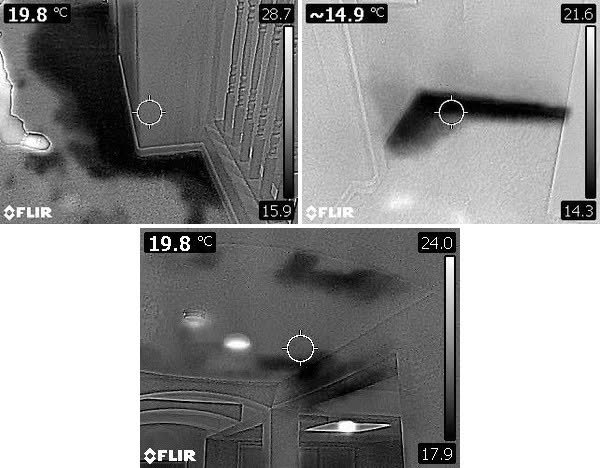
- Calibrated FLIR® Radiometric Infrared Thermal Scans: Thermal scans documenting moisture boundaries and identifying latent high-resistance electrical connections across busbars, transformers, and concrete pads, validating targeted desiccant purging over mass replacement.
- Tamper-Proof Cloud-Connected IoT Telemetry: Continuous IoT dataloggers installed in inverter enclosures, BESS containers, and process air ducts record dry-bulb temperature, relative humidity, dew point, and GPP at 15-minute intervals. Cloud-synchronized psychrometric logs provide adjusters with empirical proof of continuous drying.
- Certified Insulation Resistance (Megger) Test Logs: Pre- and post-restoration digital insulation resistance dossiers conducted at 1,000V, 2,500V, and 5,000V DC across all cables and busbars. Certified megohm readings (>1,000 MΩ) prove dielectric restoration, satisfying manufacturer warranty and utility interconnection requirements.
- Certified Hazardous Waste Disposal Manifests: Complete chain-of-custody manifests and ADEQ disposal logs for all extracted glycol coolants, transformer oils, and caliche slurry, verifying complete environmental compliance.
The following table outlines primary commercial Xactimate® billing codes utilized by Phoenix Damage Pros to document industrial solar and BESS water damage restoration projects:
| Xactimate® Code | Billing Category | Item Description & Industrial Scope of Work | Measurement Unit |
|---|---|---|---|
| WTR EXTTR> | Heavy Slurry Extraction | Industrial vacuum extraction of floodwater and caliche silt slurry from subterranean cable trenches and inverter vaults. | Square Feet (SF) |
| WTR DRYD> | Desiccant Dehumidification | Industrial solid-rotor desiccant unit (2,000–10,000 CFM) delivering ultra-deep psychrometric depression (<10 GPP). | Daily Rate (DA) |
| WTR DRYDAH> | Enclosure Purge Ducting | Heavy-duty spiral ducting configured for positive-pressure dry air purging of central inverters and BESS containers. | Linear Feet (LF) |
| HMR BARR | NFPA Hazard Isolation | Construction of NFPA 855 and NFPA 70E safety perimeter, environmental barriers, and arc flash exclusion zones. | Square Feet (SF) |
| ELE PROT> | High-Voltage PPE Protocol | Deployment and maintenance of NFPA 70E Category 4 arc flash protective equipment, Class 4 hot sticks, and insulating blankets. | Per Crew/Day (EA) |
| ELE CLN> | Dielectric Electronic Salvage | Precision micro-cleaning of busbars and circuit boards using dry-ice ($CO_2$) pellet blasting and zero-residue dielectric flushing. | Machine Hour (HR) |
| HAZ DISP> | Hazardous Effluent Disposal | ADEQ-compliant containment, transportation, and manifest processing of glycol coolants, transformer oils, and chemical effluent. | Each Drum (EA) |
| WTR VAC> | Sub-Surface Trench Vacuum | Negative-pressure extraction arrays sealed across subterranean cable raceways for continuous deep vapor desiccation. | Square Feet (SF) |
| ELE TEST> | Insulation Resistance Megger | Precision digital megohmmeter dielectric testing of 1,500V DC and medium-voltage collection cables and central inverter switchgear. | Each Circuit (EA) |
| HMR AIRM | Atmospheric Gas Monitoring | Continuous multi-gas telemetry monitoring of % LEL ($H_2$), $O_2$, $CO$, and hydrogen fluoride ($HF$) in enclosed BESS containers. | Daily Rate (DA) |
Why Greater Phoenix Facility Directors Rely on Phoenix Damage Pros
When desert flash floods, cooling loop failures, or stormwater backups compromise commercial solar generating plants, central inverters, or containerized BESS installations across Greater Phoenix, choosing an accredited commercial restoration contractor is vital to protecting multi-million-dollar power assets and ensuring grid safety.
- Full Arizona Commercial Contracting Licensure: Phoenix Damage Pros holds active Arizona Commercial General Contracting License AZ ROC #342819, fully bonded and insured for high-voltage industrial generation, substation restoration, and hazardous decontamination across Arizona.
- Guaranteed 45-Minute Emergency Mobilization: Operating rapid-response units across Maricopa County, we guarantee on-site mobilization within 45 minutes to any solar field or commercial facility in Phoenix, Scottsdale, Tempe, Mesa, Chandler, Glendale, Gilbert, Peoria, Tolleson, Buckeye, and Goodyear.
- High-Voltage Certified Industrial Restorers: Our teams are certified in NFPA 70E, NFPA 855, and OSHA 29 CFR 1910.269, equipped with Category 4 arc flash PPE, Class 4 insulated hot sticks, and precision dielectric diagnostic instruments.
- Arizona’s Premier Industrial Desiccant Fleet: We operate high-capacity trailer-mounted industrial solid-rotor desiccant dehumidifiers delivering tens of thousands of CFM of ultra-dry process air (<10 GPP), engineered to purge high-voltage enclosures without altering sensitive thermal parameters.
- Deep Sonoran Hydrological Expertise: We understand desert caliche silt sedimentation, hyper-arid heat, and high-velocity monsoon runoff, deploying specialized slurry hydro-extraction and non-abrasive dry-ice micro-pellet decontamination rigs.
- Centralized Camelback Corridor Headquarters: Executive management and corporate dispatch are centralized at 2415 E Camelback Rd, Suite 400, Phoenix, AZ 85016, providing executive oversight and logistical support across Maricopa County.
- Dedicated 24/7 High-Voltage Industrial Dispatch Desk: Unrestricted, direct 24/7/365 telephone access to our senior industrial disaster coordinators via our emergency operations center at (602) 587-1380.
Detailed Technical Frequently Asked Questions: Solar Inverter & BESS Dewatering
1. What is the immediate procedure for mitigating stranded electrical energy in a flooded BESS enclosure?
Stranded energy occurs when submerged lithium battery modules remain charged, sustaining electrolysis, hydrogen gas release, and thermal runaway hazards. Phoenix Damage Pros executes strict NFPA 855 protocols: technicians initiate continuous multi-gas telemetry monitoring for % LEL ($H_2$) and hydrogen fluoride ($HF$) gas. Operating in NFPA 70E arc flash suits and Class 4 insulated gloves, specialists utilize insulated hot sticks to remove module-level manual service disconnects (MSDs), breaking 1,500V DC strings down into sub-50V segments before fluid extraction begins.
2. How do you decontaminate and dewater 1,500V DC central solar inverters without damaging sensitive electronics?
Conventional restoration contractors use water-based detergents that destroy power electronics. Phoenix Damage Pros follows an engineering decontamination protocol: after verifying zero energy state via LOTO, standing water is removed using pneumatic extractors. Copper busbars, IGBT modules, and laminated DC bus stacks are cleaned using zero-residue dielectric solvents (>35 kV rating) or dry-ice ($CO_2$) pellet blasting, followed by high-volume desiccant process air purging to eliminate residual moisture.
3. What specific insulation resistance (Megger) threshold is required before re-energizing flooded solar equipment?
Under IEEE 43, IEEE 1547, and manufacturer specifications (e.g., SMA, Sungrow, Tesla), electrical equipment exposed to moisture must undergo insulation resistance testing using a digital megohmmeter. For 1,500V DC busbars, combiner boxes, and medium-voltage AC cables, Phoenix Damage Pros applies test voltages of 1,000V to 5,000V DC for 60 seconds. Restored components must demonstrate an insulation resistance exceeding 1,000 Megohms (>1,000 MΩ) and satisfy Polarization Index ratios (>2.0) before re-energization can be authorized.
4. Why are industrial desiccant dehumidifiers required instead of standard LGR refrigerant dehumidifiers?
Standard Low-Grain Refrigerant (LGR) units rely on cooling coils that suffer thermal overload in extreme Sonoran summer heat (>110°F), failing to lower humidity below 35 GPP. High-voltage power electronics require absolute humidity suppressed below 10 to 15 GPP and enclosure dew point temperatures below 25°F (-3.9°C) to prevent condensation flashover. Industrial solid-rotor desiccant dehumidifiers utilize chemical adsorption, delivering ultra-dry process air regardless of ambient temperatures.
5. How do you extract desert caliche silt slurry from subterranean medium-voltage cable trenches?
Sonoran caliche silt contains calcium carbonate and alkali salts that form conductive crusts when dry. Phoenix Damage Pros deploys vacuum extraction trucks with non-conductive hoses to evacuate standing silt slurry from cable trenches. Technicians perform low-pressure deionized water flushes to dislodge sediment between medium-voltage cables, extract wastewater completely, and establish negative-pressure desiccant airflow manifolds to dry trench walls and cable jackets without damaging XLPE insulation.
6. What happens if medium-voltage collection cables remain submerged after a flash flood?
Submerged 15 kV to 35 kV cables face electrochemical degradation known as “water treeing.” When moisture penetrates microscopic voids in polyethylene insulation under high electrical stress, microscopic branched structures form, degrading dielectric breakdown voltage and causing explosive cable failure upon re-energization. Immediate slurry evacuation, trench decontamination, and dry-air conduit purging by Phoenix Damage Pros halt water tree development.
7. How does Phoenix Damage Pros handle glycol coolant leaks combined with floodwater inside BESS units?
Modern BESS units utilize liquid-cooling loops containing ethylene or propylene glycol. When flood events or line ruptures release glycol, the mixture of coolant, water, and dissolved minerals becomes highly conductive. Phoenix Damage Pros deploys chemical-resistant diaphragm pumps to evacuate effluent into sealed 55-gallon drums, treats surfaces with neutralizing bio-detergents, and disposes of waste under strict ADEQ and Maricopa County manifests.
8. How does roof drain failure cause flooding in commercial rooftop solar inverter rooms?
Commercial rooftop solar arrays shed dust into roof gutters and scupper boxes. Monsoon rains wash this grit into drain sumps, creating clogs. Standing water pools across roofing membranes, forcing water through rooftop conduit penetrations and parapet flashings directly into rooftop inverter lineups. Phoenix Damage Pros clears exterior roof drains, installs negative-pressure desiccant purging through flooded conduits, and dewaters electrical mezzanines.
9. How does Phoenix Damage Pros satisfy utility interconnection requirements after a flood?
Electric utilities including APS and SRP enforce strict IEEE 1547 standards before permitting a flooded solar or BESS plant to reconnect to the grid. A compromised plant must prove its inverter bridge, protection relays, and transformers have maintained dielectric integrity. Phoenix Damage Pros delivers comprehensive engineering clearance dossiers, including certified Megger insulation test logs, FLIR thermal scans, and IoT psychrometric drying logs satisfying utility engineers.
10. How does your itemized Xactimate® billing accelerate commercial property insurance claims?
Commercial insurance adjusters delay claims for high-voltage energy assets when restoration estimates lack industrial line-item detail. Phoenix Damage Pros provides itemized Xactimate® estimates utilizing specific commercial electrical codes (e.g., ELE CLN>, ELE TEST>, WTR DRYD>). Combined with Matterport 3D scans, real-time IoT psychrometric curves, and certified Megger test logs, our documentation provides adjusters with indisputable forensic proof of loss, accelerating claim approvals.
Emergency Contact & Priority Commercial Mobilization Call-to-Action
If your commercial solar plant, central inverter substation, rooftop PV array, or containerized BESS facility in Greater Phoenix experiences water intrusion—whether from desert flash floods, monsoon stormwater intrusion, cable trench silt saturation, roof drainage backups, or cooling loop ruptures—immediate engineering-grade mobilization is vital to prevent electrical arc flash, mitigate stranded energy hazards, protect power electronics, and preserve grid interconnection.
Phoenix Damage Pros mobilizes 24/7/365 with certified industrial high-voltage restoration crews, trailer-mounted solid-rotor desiccant fleets, dielectric dewatering systems, and vacuum silt extraction rigs directly to your renewable energy site. Our certified specialists arrive on-site within our guaranteed 45-minute commercial mobilization window across Greater Phoenix, executing electrical isolation, sub-surface trench dewatering, dry-ice busbar micro-cleaning, and Megger-certified dielectric restoration to get your power generation plant safely back online.
Phoenix Damage Pros
2415 E Camelback Rd, Suite 400, Phoenix, AZ 85016
24/7 Industrial Solar & BESS Emergency Priority Dispatch: (602) 587-1380
Arizona Commercial Contracting License: AZ ROC #342819
Guaranteed 45-Minute Emergency Response Across Greater Phoenix: Scottsdale, Tempe, Mesa, Chandler, Glendale, Gilbert, Peoria, Tolleson, Buckeye, and Goodyear.