When musty odors, hidden plumbing leaks, or summer air conditioning condensation trigger hazardous fungal growth, your family's health and structural property value are on the line. Phoenix Water Damage Pros provides master-certified IICRC S520 mold remediation across the Valley. Utilizing medical-grade HEPA negative air containment, abrasive physical removal, EPA-registered botanical fungicides, and third-party laboratory clearance testing, we eradicate toxic mold colonies at the microscopic root.
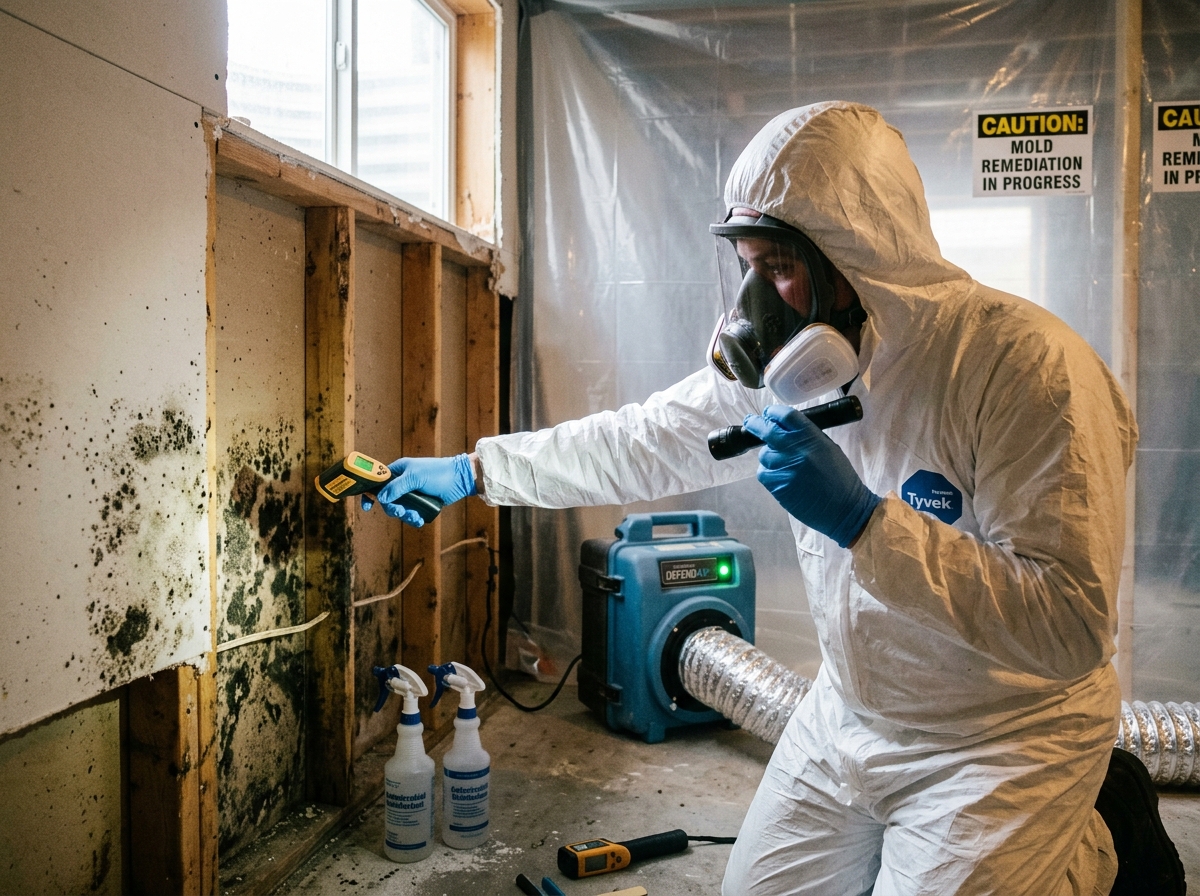
A widespread misconception among Arizona property owners is that toxic mold cannot survive in our hot, dry desert environment. In truth, the Sonoran Desert climate creates the ideal microclimatic conditions for aggressive indoor fungal growth. During our brutal summer heatwaves with temperatures exceeding 115°F, residential and commercial air conditioning systems operate non-stop to cool interior spaces to 72°F.
When superheated attic air at 150°F meets cold drywall and uninsulated air ducts carrying chilled 55°F air, the moisture in the air condenses instantly onto framing, drywall backing, and insulation. Trapped within tightly sealed, energy-efficient modern desert construction, this condensation cannot evaporate, creating a dark, warm, moisture-rich sanctuary where toxic mold colonies flourish unseen behind walls.
When microscopic fungal colonies establish inside your home, they release billions of airborne spores and volatile organic compounds (mVOCs), causing foul earthy odors and acute health symptoms. Phoenix Water Damage Pros provides scientific, root-cause eradication that guarantees clean, healthy indoor air.
Molds are eukaryotic microorganisms belonging to the kingdom Fungi. They play an essential ecological role outdoors by decomposing organic matter, but their presence inside a sealed residential or commercial building is a hazardous condition. Mold reproduces by releasing microscopic airborne spores (ranging from 1 to 20 microns in size) that easily pass through standard air filters and penetrate human lung tissue.
During forensic laboratory spore-trap sampling, our certified microbial inspectors commonly identify five primary fungal species:
| Mold Genus & Species | Preferred Substrate & Moisture Requirements | Mycotoxins Produced & Medical Health Hazards |
|---|---|---|
| Stachybotrys chartarum ("Black Mold") | Requires sustained water saturation on high-cellulose, low-nitrogen materials such as drywall paper, wood subfloors, and cardboard. | Produces potent macrocyclic trichothecene mycotoxins (satratoxins G & H). Inhalation triggers pulmonary hemorrhage, severe immune suppression, chronic fatigue, headaches, and neurological disorientation. |
| Aspergillus species | Highly adaptable; thrives on wallboard, ceiling tiles, air conditioner coils, and carpet backing at relative humidity as low as 65%. | Produces carcinogenic aflatoxins and ochratoxin A. Known opportunistic pathogen responsible for Aspergillosis, chronic sinusitis, fungal pneumonia, and severe bronchial inflammation. |
| Penicillium species | Proliferates rapidly across wet wallpaper, fiberglass duct lining, wood framing, and damp foam furniture padding. | Produces citrinin and ochratoxin mycotoxins with aerodynamic spores that remain airborne for hours, causing acute asthma attacks, allergic rhinitis, and hypersensitivity pneumonitis. |
| Cladosporium | Colonizes both warm and cool surfaces, frequently found on HVAC supply registers, window sills, and bathroom grout. | Produces volatile organic compounds (mVOCs) responsible for pungent earthy smells; causes chronic eye irritation, sneezing, skin lesions, and upper respiratory congestion. |
| Alternaria | Common desert outdoor mold that infiltrates structures during monsoon dust storms, settling on damp building components. | One of the most potent triggers of childhood asthma in the southwestern United States, causing acute wheezing and allergic bronchopulmonary reactions. |
The danger of mold extends far beyond simple allergic sneezing. When toxigenic mold colonies face competitive stress or desiccation, they produce secondary chemical metabolites called mycotoxins. These microscopic chemical poisons adhere to dust particles and aerosolize through living spaces. Medical research connects prolonged mycotoxin exposure to Chronic Inflammatory Response Syndrome (CIRS), cognitive impairment ("brain fog"), systemic joint pain, extreme lethargy, and autoimmune dysfunction.
The single most common mistake made by Phoenix homeowners and amateur handymen is attempting to kill mold with household chlorine bleach (sodium hypochlorite). While bleach can briefly lighten surface discoloration on non-porous glass or porcelain, using it on porous drywall, wood studs, concrete, or grout actually accelerates fungal proliferation.
Household bleach is typically composed of approximately 5% to 6% sodium hypochlorite diluted in 94% to 95% water. Chlorine has high surface tension and a large molecular structure that prevents it from penetrating into the microscopic pores of drywall or wood. The chlorine chemical remains on the exterior surface, rapidly outgassing into toxic fumes. Meanwhile, the 95% water component readily soaks deep into the porous material, hydrating the root system (mycelium) and hyphae that bleach could not reach.
Within 7 to 14 days of spraying bleach, the subterranean fungal roots consume the absorbed water and burst through the surface with renewed vigor, releasing billions of defensive stress spores into the air. Professional mold remediation never relies on surface bleaching; it mandates the complete physical removal of contaminated porous materials and abrasive extraction of fungal roots on structural timber.
From initial thermal inspection to independent post-remediation clearance testing, our process ensures 100% eradication.
We conduct forensic thermal imaging to locate moisture sources and perform baseline spore-trap air sampling comparing indoor spore concentrations against ambient outdoor air metrics.
We seal off the work zone with 6-mil flame-retardant poly sheeting and heavy-duty magnetic zipper doors. Negative air machines exhaust outside, ensuring zero spore escape into living areas.
Commercial air scrubbers equipped with true hospital-grade HEPA filters (99.97% efficiency at 0.3 microns) continuously scrub the air, performing 6 to 8 complete air changes every hour.
Contaminated porous drywall and insulation are bagged inside containment. Structural framing is wire-brushed, sanded, or media-blasted to physically remove deep hyphae roots.
All structural wood is micro-wiped with EPA-registered botanical antimicrobials (Benefect Decon 30) and coated with a protective white antimicrobial polymer encapsulant to prevent future growth.
An independent environmental testing lab collects post-remediation air and surface samples. Containment is dismantled only when lab results confirm normal fungal ecology (Condition 1).
We work directly with State Farm, Allstate, Farmers, USAA, Travelers, Liberty Mutual, and commercial carriers. We submit itemized estimates via Xactimate® to cover remediation, containment, and full structural rebuild.
The ANSI/IICRC S520 Standard establishes three distinct environmental conditions for materials: Condition 1 (Normal Fungal Ecology), Condition 2 (Settled Spores), and Condition 3 (Actual Growth). Our remediation strategies are engineered according to the material's porosity rating and condition level:
Gypsum drywall with Condition 3 mold growth cannot be salvaged. Fungal hyphae penetrate the paper lining and embed directly into the gypsum matrix. Attempting to sand or wipe drywall simply releases millions of spores into the air.
Remediation Protocol: Technicians mist the drywall with botanical biocides to suppress spore release, make neat cuts at least 12 inches beyond visible mold colonies, bag the contaminated drywall inside 6-mil poly bags within the containment zone, and dispose of it at certified facilities.
Wood framing members are dense structural elements that cannot easily be removed without compromising the building's structural integrity. Fortunately, wood is semi-porous, meaning mold hyphae generally penetrate only 1/16 to 1/8 inch into the grain unless long-term dry rot has occurred.
Remediation Protocol: We perform HEPA vacuuming to remove loose surface spores, followed by aggressive mechanical sanding, wire brushing, or cryogenic dry-ice blasting to strip down to virgin white wood. After a double wash with EPA-registered botanical fungicides, we seal the timber with a breathable antimicrobial elastomeric coating that permanently prevents moisture absorption.
If mold contaminates your central air conditioning system, every time the blower turns on, it distributes spores into every room in your home. Fiberglass duct liners are particularly vulnerable because dust accumulation provides a nutrient source while AC condensation provides continuous moisture.
Remediation Protocol: Mold-colonized internal fiberglass duct liners cannot be sanitized and must be removed and replaced with closed-cell antimicrobial insulation. Solid sheet-metal ductwork is mechanically scrubbed under negative HEPA pressure, sanitized with EPA-approved duct biocides, and inspected via robotic fiber-optic cameras before re-commissioning.
Showers in Arizona homes frequently develop mold due to defective waterproofing membranes, failing caulk, or porous cementitious grout. When water penetrates beneath shower floor tiles, it saturates the sand-mortar bed, creating an unseen microbial reservoir.
Remediation Protocol: Surface mold on non-porous ceramic tiles can be sanitized with specialized sporicides. However, if moisture meters detect water trapped beneath the tile in the mortar bed, surgical removal of the lower tile rows and shower pan is required to eliminate the colony and prevent structural rot under the subfloor.
Arizona's intense heat, air conditioning dependency, and unique construction types produce specific fungal patterns.
Phoenix air conditioners generate up to 20 gallons of condensate daily during summer. When drain pans crack from 150°F attic heat or algae plugs the drain line, moisture pools silently on ceiling drywall, cultivating massive Stachybotrys colonies within days.
Extreme temperature differences between cold metal ductwork (55°F) and superheated attic air (140°F+) cause uninsulated or torn ducts to "sweat" heavily. Water droplets soak into blown-in insulation and ceiling drywall, creating widespread mold blooms.
Pinhole copper slab leaks under concrete foundations release warm water that wicks into baseboards, drywall, and luxury vinyl plank flooring. Because water spreads horizontally under the floor, massive mold colonies grow behind walls before visible signs appear.
In luxury Scottsdale and East Valley homes, aging shower pan liners or hairline cracks in travertine tiles allow water to seep behind walls, rotting wall studs and breeding dense black mold colonies behind adjoining bedroom closets.
Southwestern-style flat roofs accumulate desert dust and debris that clog drainage scuppers during summer monsoon storms. Pooled water breaches parapet wall flashings, saturating wall insulation and cultivating mold inside exterior walls.
Plastic quarter-inch tubing supplying under-sink reverse osmosis filters and refrigerator ice makers becomes brittle from hard water mineral scale. Slow pinhole drips behind cabinets produce extensive hidden mold colonies before discovery.
In commercial buildings with drop-ceiling return air plenums, stagnant air and roof condensation create ideal mold incubation zones that contaminate supply ductwork, triggering "Sick Building Syndrome" among corporate tenants.
Aged shut-off valves or loose drain connections behind washing machines, dishwashers, and bathroom vanities create continuous micro-leaks that feed fungal growth inside insulated exterior walls for months.
Insurance coverage for mold remediation is one of the most disputed areas of property insurance. Many standard homeowner insurance policies contain specific mold limitations or endorsement caps (often capping mold remediation at $5,000 to $10,000). However, the crucial legal and contractual distinction lies in the proximate cause of the loss.
If mold resulted from a covered "sudden and accidental" water disaster (such as a burst pipe, water heater failure, or ruptured appliance line), the majority of demolition, drying, and structural reconstruction costs fall under your primary Water Damage Dwelling Coverage (which typically has no arbitrary $5,000 cap). Only the specialized mold remediation activities (such as air scrubbing and antimicrobial sealing) fall under the mold sub-limit.
Microbial contamination in the Sonoran Desert thrives invisibly behind walls, under cabinetry, and beneath tile. Review authentic photographic evidence of toxic black mold colonies, fungal fruiting mushrooms, critical ZipWall negative-pressure chambers, and Level C PPE demolition performed by our certified specialists.
 Scottsdale, AZ
HEPA AIRLOCK
Hermetically sealed 6-mil poly containment with red barrier tape and zipper airlock entryway in Scottsdale, AZ.
 Phoenix, AZ
STACHYBOTRYS COLONY
Dense toxic black mold (Stachybotrys) colonization discovered behind cracked bathroom shower tiles in Phoenix, AZ.
 Scottsdale, AZ
HIDDEN INFESTATION
Hidden fungal spore colonies uncovered after baseboard removal along water-damaged drywall sill plate in Scottsdale, AZ.
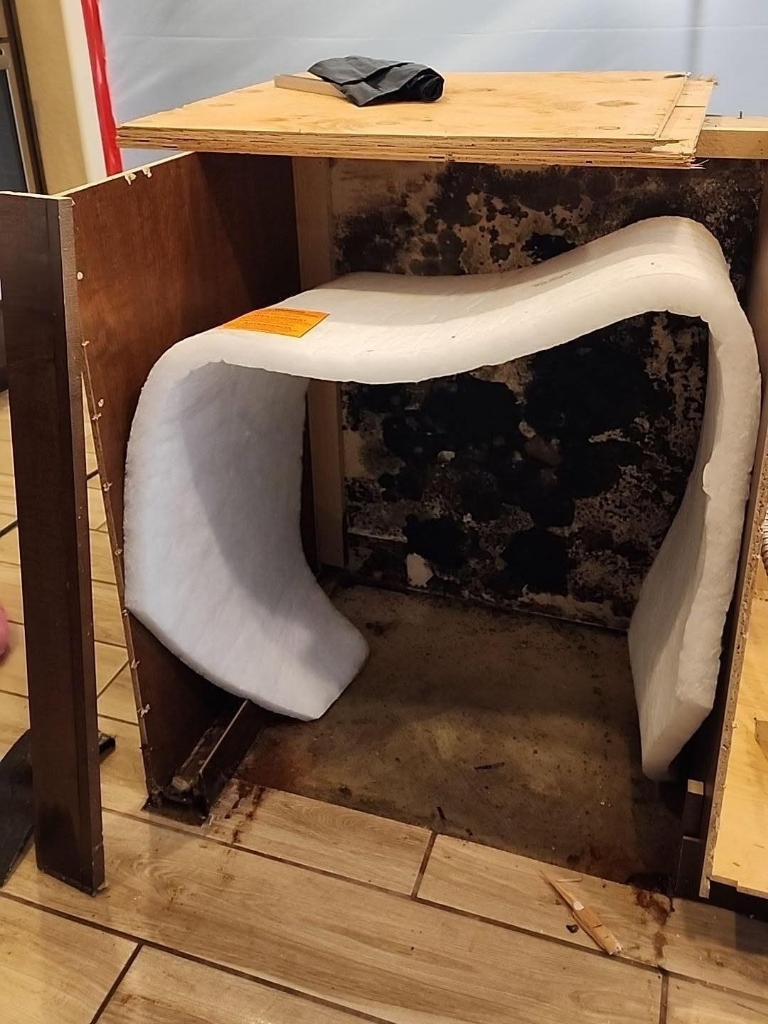 Phoenix, AZ
SUB-CABINET ROT
Rotted wood framing and black mold infestation uncovered behind extracted kitchen sink cabinetry in Phoenix, AZ.
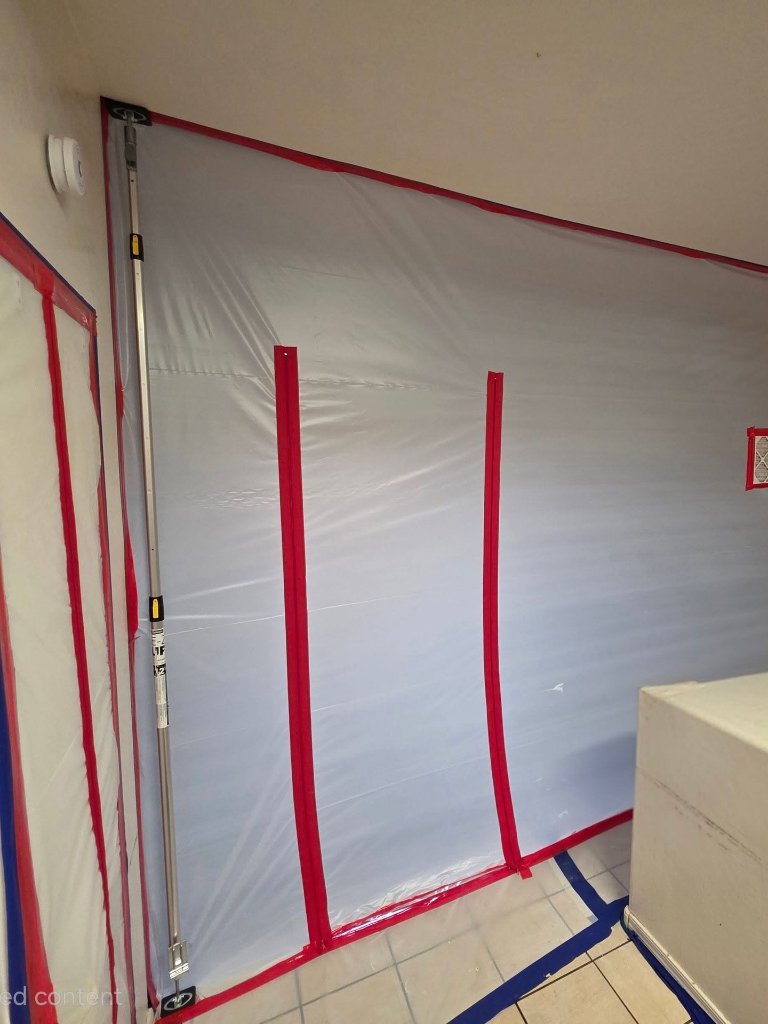 Phoenix, AZ
ZIPWALL CHAMBER
ZipWall isolation chamber with dual heavy-duty red zippers preventing dust and mold migration in Phoenix, AZ.
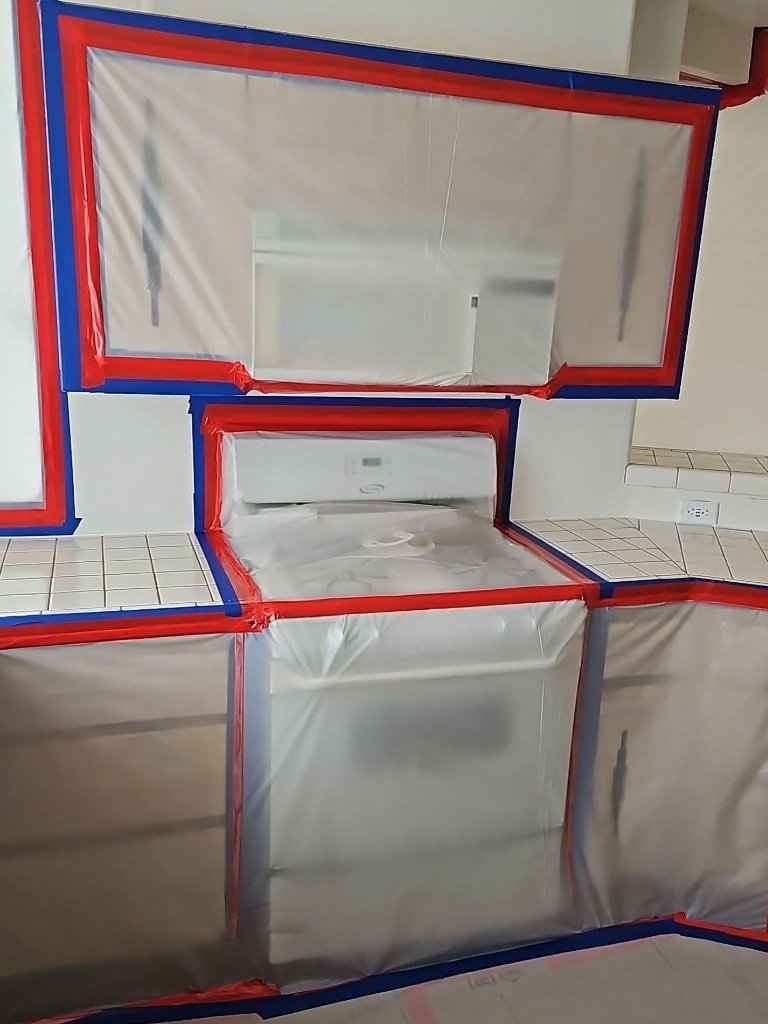 Phoenix, AZ
APPLIANCE ISOLATION
Individually masked kitchen range and cabinets sealed with blue and red tape to prevent particulate settling.
 Phoenix, AZ
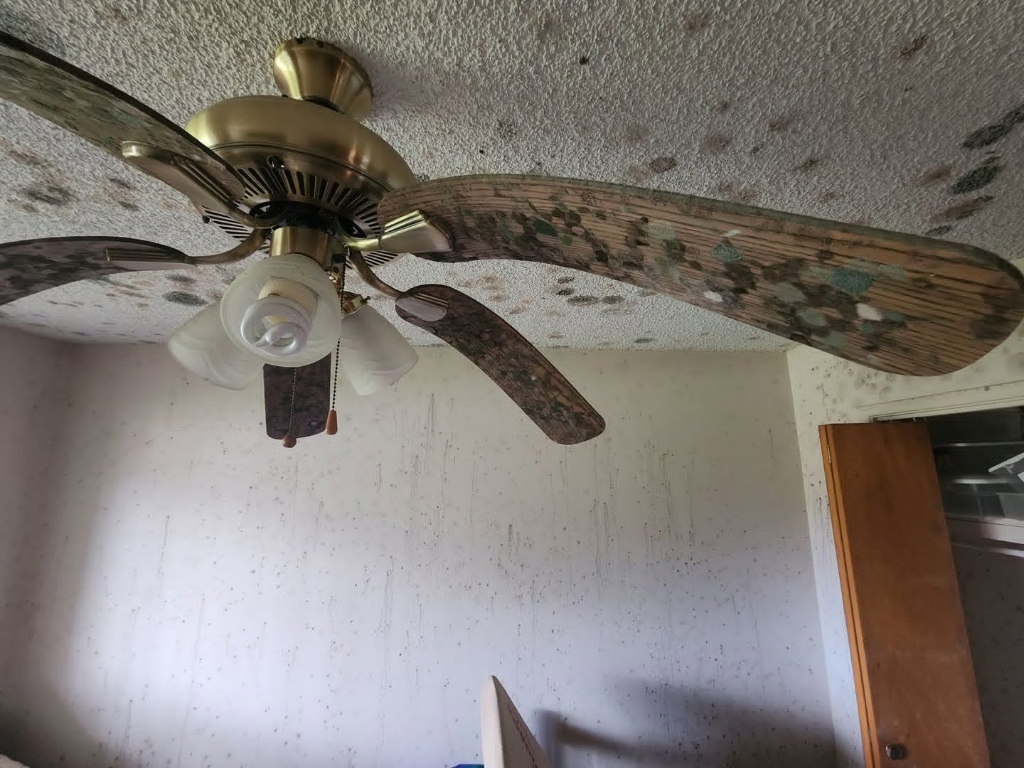
SPORE AMPLIFICATION
Severe fungal bloom and spore colonization on ceiling fan paddles and popcorn drywall after undetected roof leak in Phoenix, AZ.
 Phoenix, AZ
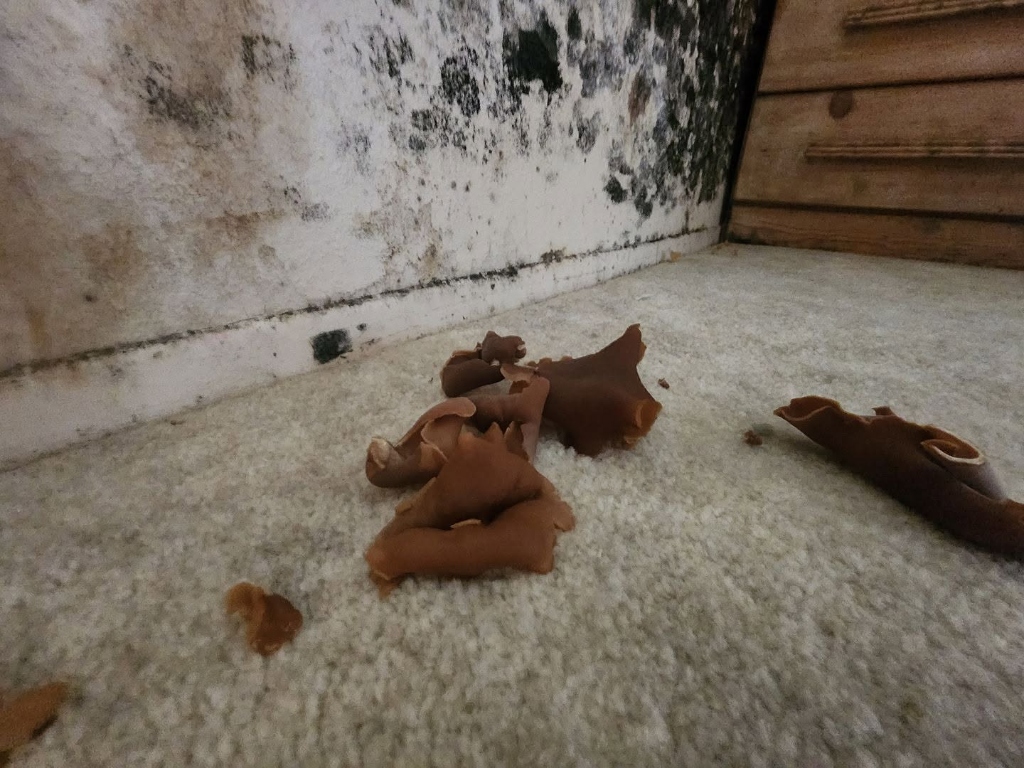
PEZIZA DOMICILIANA
Severe Peziza domiciliana decay mushrooms sprouting from waterlogged bedroom carpet and baseboards in Phoenix, AZ.
 Phoenix, AZ
HEPA NEGATIVE AIR
Phoenix Guardian HEPA 500 air scrubber pulling continuous negative pressure inside containment zone.
 Phoenix, AZ
LEVEL C HAZMAT
Certified remediation specialist in full Tyvek suit and P100 respirator demolishing contaminated framing in Phoenix, AZ.
 Phoenix, AZ
BEDROOM COLONIZATION
Severe black mold growth throughout master bedroom framing and drywall in Phoenix, AZ, requiring full containment and antimicrobial remediation.
 Scottsdale, AZ
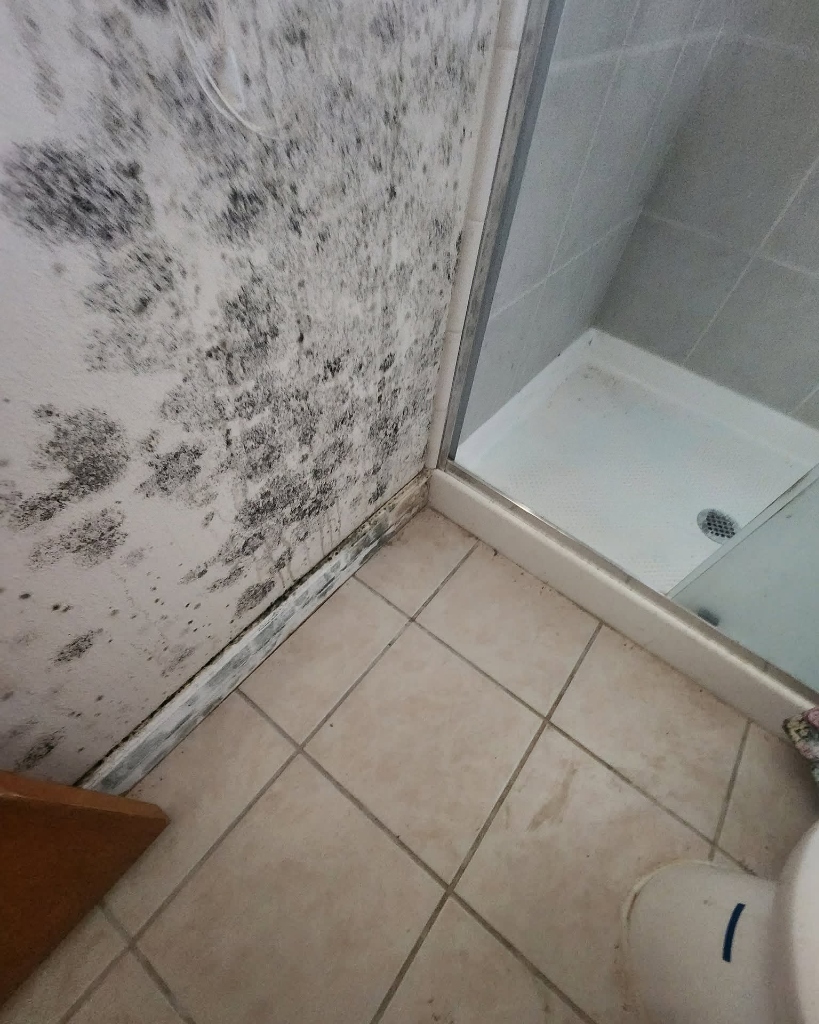
SHOWER DRYWALL MOLD
Black mold colony remediation on saturated drywall framing next to shower enclosure in Scottsdale, AZ.
 Gilbert, AZ
ANTIMICROBIAL SEAL
Post-mitigation antimicrobial encapsulation barrier sealing structural studs against microbial growth in Gilbert, AZ.
 Phoenix, AZ
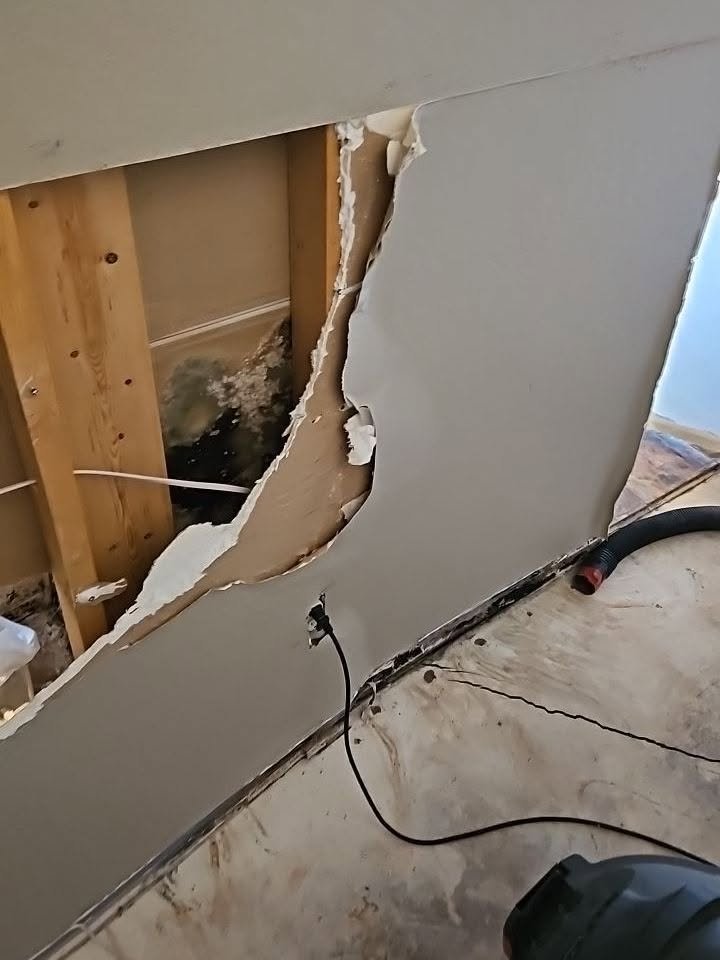
DRYWALL DEMO
Surgical drywall removal exposing active fungal colony on paper backing and studs in Phoenix, AZ.
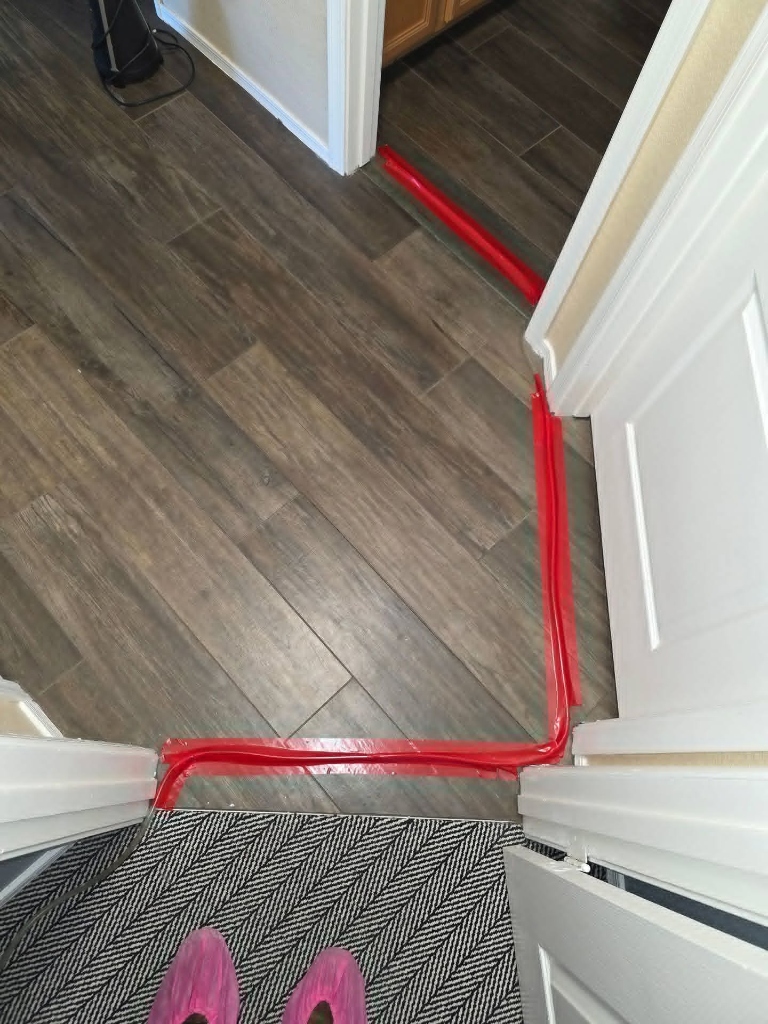 Paradise Valley, AZ
THRESHOLD SEAL
Airtight floor transition containment barrier isolating contaminated zones in Paradise Valley, AZ.
 Scottsdale, AZ
NEGATIVE AIR
Engineered negative pressure containment chamber preventing cross-contamination in Scottsdale, AZ.
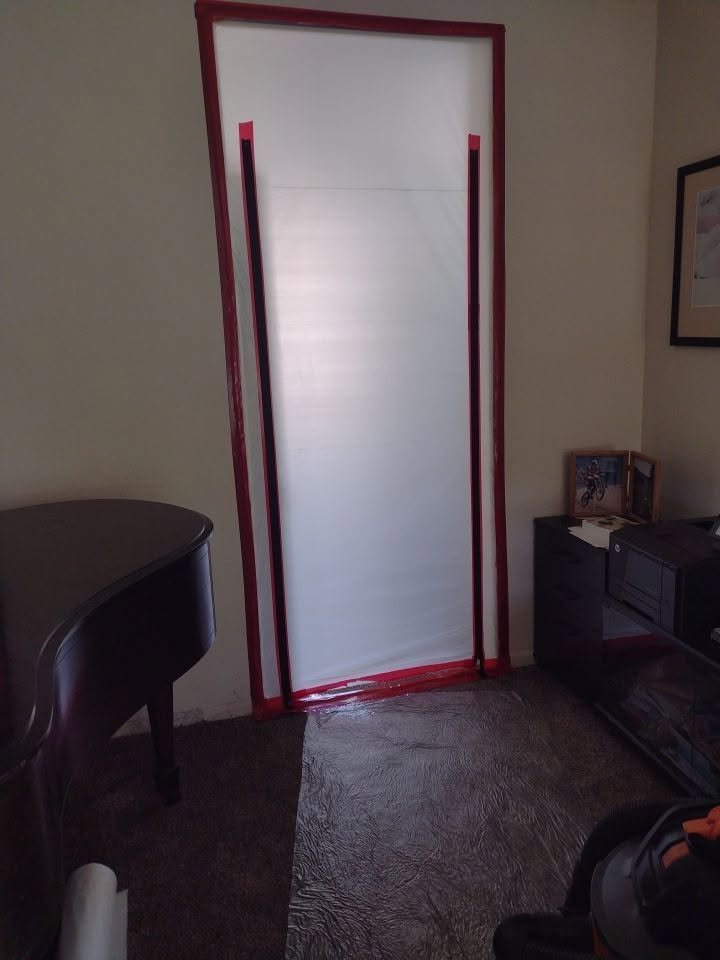 Scottsdale, AZ
ZIPPER AIRLOCK
Heavy-duty zipper containment door securing residential living area during microbial mitigation in Scottsdale, AZ.
 Phoenix, AZ
DUAL AIRLOCK
Corridor Ram Board surface protection with dual red zipper airlock containment in Phoenix, AZ.
 Scottsdale, AZ
HEPA INTAKE VENTS
Poly barrier engineered with dual HEPA intake vents maintaining balanced air pressure in Scottsdale, AZ.
 Tempe, AZ
BEFORE & AFTER
Dramatic before and after transformation: hazardous black mold colonization remediated to pristine antimicrobial-sealed framing in Tempe, AZ.
We provide 24/7 emergency dispatch across the entire Phoenix metropolitan area. For active mold emergencies or situations involving water leaks with visible fungal growth, our certified technicians arrive on-site within 30 to 60 minutes. We can immediately establish negative air containment to stop spores from spreading into unaffected areas of your property.
Post-Remediation Verification (PRV) is an objective scientific inspection performed by an independent third-party environmental testing lab after remediation is complete. The inspector collects air-o-cell spore trap samples inside the containment zone and compares them to outdoor control samples. Clearance is granted only when the lab confirms that indoor spore concentrations are equal to or lower than outdoor levels and that no toxigenic species (like Stachybotrys) are detected. We never take down containment until third-party clearance is officially certified.
According to official guidelines from the U.S. Environmental Protection Agency (EPA), property owners can typically clean small mold patches on non-porous surfaces if the total affected area is less than 10 square feet (roughly a 3-foot by 3-foot patch). However, if mold covers more than 10 square feet, if it involves HVAC ductwork, if Category 3 water was involved, or if building occupants suffer from respiratory conditions or compromised immunity, professional remediation under critical negative air containment is strongly recommended.
The distinctive musty, earthy smell associated with mold is caused by microbial Volatile Organic Compounds (mVOCs). As mold colonies actively digest cellulose building materials, they release metabolic gases including geosmin, 1-octen-3-ol, and 2-methylisoborneol. Because these gaseous compounds possess low olfactory detection thresholds, human noses can detect active mold colonies growing hidden behind walls or under subfloors long before visible colonies appear.
In most residential projects where mold is localized to a single room (such as a guest bathroom or laundry room), occupants can safely remain in the home. Our airtight 6-mil poly containment barriers, magnetic zipper airlocks, and HEPA negative air filtration ensure that zero mold spores escape into living areas. However, for severe whole-home infestations involving the HVAC system, temporary relocation is recommended until clearance testing is achieved.
Microscopic mold spores exist naturally in all indoor and outdoor air; completely removing every single spore from an environment is biologically impossible. "Mold removal" is a misleading marketing term. "Mold remediation," conversely, is the scientifically accurate process defined by the IICRC S520 Standard. It involves eliminating active fungal growth colonies, physically removing contaminated porous materials, resolving the moisture source, and returning indoor air quality to a safe, natural fungal equilibrium (Condition 1).
Homeowners insurance generally covers mold remediation if the fungal growth is the direct result of a covered "sudden and accidental" water loss, such as a burst pipe, water heater failure, or ruptured appliance hose. Policies typically exclude mold resulting from long-term unresolved maintenance issues, continuous foundation seepage, or high humidity. Many policies include a mold endorsement cap (usually between $5,000 and $10,000), but we help maximize your claim by billing general demolition and drying under your uncapped structural dwelling coverage.
Exposure to mold spores and mycotoxins can trigger diverse health symptoms depending on exposure duration and individual sensitivity. Common symptoms include persistent sneezing, nasal congestion, burning eyes, chronic coughing, skin rashes, throat irritation, and frequent sinus infections. In individuals with mold allergies, asthma, or compromised immune systems, exposure can cause severe bronchospasms, memory issues, fatigue, and systemic inflammatory reactions (CIRS).
We locate hidden mold non-destructively using advanced diagnostic instruments: high-resolution FLIR infrared thermal cameras detect subtle temperature differentials caused by moisture evaporation inside walls; non-invasive radio-frequency moisture meters map the boundaries of trapped moisture; and fiber-optic borescopes allow us to visually inspect inside wall cavities through tiny 1/4-inch access ports without damaging drywall finishes.
An antimicrobial encapsulant is a specialized commercial-grade protective coating applied to structural wood framing, concrete, and subfloors after all mold colonies and hyphae roots have been physically removed. The encapsulant contains EPA-registered fungistatic agents that bond with the substrate, forming an impenetrable moisture-resistant barrier that permanently prevents future mold spores from colonizing the wood.
No. Companies that claim to eliminate mold simply by "fogging" or "spraying" chemicals without physical removal are violating ANSI/IICRC S520 professional standards. Dead mold spores still contain allergenic proteins and dangerous mycotoxins capable of causing severe respiratory illness. True mold remediation requires physical removal of contaminated porous materials, HEPA vacuuming, and abrasive wire brushing. Fogging is merely a secondary finishing step, never a standalone cure.
A typical residential mold remediation project requires between 2 and 4 days. Day 1 involves establishing critical containment, negative air pressure, and selective demolition; Day 2 involves abrasive stud cleaning, HEPA vacuuming, and antimicrobial washing; Day 3 involves continuous HEPA air scrubbing and third-party clearance air sampling; Day 4 involves receiving laboratory results, teardown of containment, and beginning structural repairs.
Yes. Phoenix Water Damage Pros holds a full Arizona General Contracting license (ROC #342819). Once third-party clearance certification is issued, our licensed carpenters and drywall specialists hang new drywall, match textures, apply primer and paint, and reinstall baseboards, vanities, tile, and flooring to return your property to flawless condition.
The golden rule of mold prevention is controlling indoor moisture. To keep mold away permanently: maintain indoor relative humidity below 50% using your air conditioning system; clean and service AC condensate drain lines annually; promptly fix any plumbing drips or slab leaks; operate bathroom exhaust fans for at least 20 minutes following showers; and inspect flat roofs and parapet walls after major monsoon storms.
Our master IICRC S520 certified specialists are on standby 24/7/365 with thermal imaging cameras, HEPA scrubbers, and independent laboratory testing. Rapid 60-minute arrival across Maricopa County.
Disturbing active mold colonies improperly can aerosolize millions of microscopic spores throughout your home, contaminating clean living spaces and triggering acute health reactions. Follow these strict safety precautions: