When catastrophic burst pipes, pressurized slab leaks, water heater ruptures, or violent monsoon flash floods strike your residential property or commercial facility, every second counts. Phoenix Water Damage Pros deploys master-certified IICRC restoration teams equipped with industrial truck-mounted water extractors, commercial low-grain refrigerant (LGR) dehumidifiers, high-velocity axial air movers, and FLIR thermal imaging cameras. We halt ongoing destruction, salvage critical building assemblies, prevent secondary toxic mold amplification, and return your property to pristine pre-loss condition.

Water intrusion is an inherently dynamic and progressive catastrophe. Water does not sit passively on top of flooring materials; it seeks the path of least resistance through capillary action, surface tension, and gravity. Within minutes of a plumbing failure, standing water migrates under baseboards, seeps through grout lines, saturates porous gypsum wallboard cores, and travels unseen through sill plates into neighboring rooms and lower levels.
While Phoenix is globally renowned for its dry, arid outdoor climate, indoor water disasters create a closed, supercharged microclimate. When thousands of gallons of water become trapped within insulated wall cavities, under subfloors, and behind cabinetry, indoor relative humidity rapidly surges beyond 85%. Combined with typical Arizona summer indoor temperatures between 78°F and 90°F, this enclosed environment becomes an incubator for fungal organisms. Toxic mold spores such as Aspergillus, Penicillium, and Stachybotrys chartarum germinate and establish thriving colonies in as few as 24 to 48 hours.
Our emergency response protocol is designed to eliminate this threat immediately. By arriving on-site within 60 minutes, our certified restoration technicians rapidly extract standing surface water, establish controlled vapor pressure gradients, and direct thermal energy to halt structural degradation before secondary biological contamination takes root.
Professional water damage restoration is not an arbitrary cleaning trade. It is an engineering discipline governed strictly by the Institute of Inspection, Cleaning and Restoration Certification (IICRC) under the ANSI/IICRC S500 Standard for Professional Water Damage Restoration. Determining the exact category and class of water loss dictates the legal, health, and procedural requirements for structural demolition, equipment calculation, antimicrobial selection, and personal protective equipment (PPE).
The category of water loss describes the level of chemical, physical, and biological contamination present in the source water, as well as the progressive contamination that occurs as water sits stagnant inside a structure.
| Category Level | Source & Contamination Characteristics | Health Risk & Mandatory Engineering Protocol |
|---|---|---|
| Category 1: Clean Water | Originates from a sanitary water source that poses no initial threat to humans. Common examples include broken freshwater supply lines, malfunctioning sink faucets without additives, toilet supply hoses upstream of the tank, melting ice or snow, and falling rainwater before contacting building materials. | Minimal initial health hazard. However, Category 1 water is chemically unstable inside a building. As it dissolves drywall paper, carpet dyes, and accumulated dust, microbial activity accelerates. If not completely dried within 24 to 48 hours, Category 1 water naturally degrades into Category 2 grey water. |
| Category 2: Grey Water | Contains significant biological, chemical, or physical contamination and possesses the potential to cause discomfort or sickness if exposed to skin, ingested, or inhaled as bioaerosols. Common sources include dishwasher overflow or discharge lines, washing machine drain line leaks, toilet bowl overflows containing urine but no fecal matter, and sump pump chamber overflows. | Moderate to severe health hazard. Highly porous structural materials, including carpet padding, cellulose attic insulation, and saturated fiberglass batts, cannot be sanitized effectively and must be carefully removed and disposed of. Restorable porous and semi-porous surfaces require hospital-grade antimicrobial washing under controlled air filtration. |
| Category 3: Black Water | Grossly contaminated water containing pathogenic bio-agents, dangerous endotoxins, fungi, fecal matter, heavy metal residues, pesticides, or toxic organic compounds. Sources include sewer system backups, toilet backups containing feces, rising river or stream overflow, seawater intrusion, and surface runoff from monsoon street flooding entering through foundations. | Extreme biohazard condition. Poses immediate and severe risks of bacterial, parasitic, and viral infection (including E. coli, Salmonella, Hepatitis A, and Norovirus). All porous building elements saturated by Category 3 water must be cut out, bagged in bio-rated containers, and removed. Technicians must wear Level C Hazmat personal protective equipment with full respiratory protection. |
While categories define biological danger, the "Class" of water describes the physical volume of water, the rate of evaporation required, and the types of materials that have absorbed moisture within the affected space.
Only a small portion of a room or area is affected. Moisture has saturated only low-porosity materials such as concrete, ceramic tile, or plywood, or has lightly dampened carpeting with minimal absorption into drywall or subflooring. Class 1 losses require minimal dehumidifier capacity and can typically be resolved within 48 to 72 hours.
An entire room or multiple living areas are inundated. Water has wicked up gypsum drywall walls between 12 and 24 inches, saturated carpet and cushion pads, and dampened structural framing lumber. High-velocity air movers and commercial LGR dehumidifiers are required to handle substantial evaporation loads.
Water frequently originates from overhead sources such as ruptured attic piping, second-story supply line failures, or roof penetrations during severe weather. Ceilings, insulation, structural wall cavities, subflooring, and carpet across entire structures are thoroughly drenched. Substantial drying capacity and high-output dehumidification arrays are required.
Water has saturated deeply bound, dense materials with low permeance, such as solid hardwood flooring, concrete foundation slabs, plaster walls, brick, or structural crawlspace framing. Standard refrigerant dehumidifiers fail in these conditions; specialized high-temperature desiccant drying systems and negative-pressure floor mats are mandatory.
Restoring a water-damaged building is fundamentally an exercise in applied thermodynamics and psychrometry—the scientific study of the thermodynamic properties of moist gas mixtures, specifically the relationship between water vapor, temperature, and atmospheric pressure. Many inexperienced property owners believe that opening windows or placing household fans will dry their homes. In reality, improper ventilation during an Arizona summer simply introduces hot, ambient outdoor air, supercharging mold incubation and driving moisture deeper into structural framing members.
Without scientific psychrometric control, water evaporates from the floor into the room air, reaches saturation, and then condenses onto cooler ceilings, interior partition walls, and behind closets in unaffected rooms. This catastrophic phenomenon is known as secondary water damage. To prevent secondary loss, our certified psychrometric engineers manipulate four physical forces:
A thin layer of cool, stagnant, 100% saturated air clings to the surface of wet materials, insulating them from evaporation. High-velocity centrifugal and axial air movers generate laminar vortex airflow across surfaces, stripping away this boundary layer and accelerating phase change from liquid to vapor.
Evaporation is an endothermic reaction that consumes heat, cooling the wet surface and slowing further drying. By introducing calculated thermal energy through directed heat arrays or the sensible heat output of LGR dehumidifiers, we elevate the internal vapor pressure of trapped moisture.
Moisture obeys the second law of thermodynamics, naturally diffusing from areas of high vapor pressure to areas of low vapor pressure. By driving ambient grains of moisture downward through continuous dehumidification, we create a steep vapor pressure deficit that forces moisture out of dense assemblies.
Every single day during the restoration process, Phoenix Water Damage Pros technicians record detailed psychrometric readings inside the affected containment zones, in unaffected reference rooms, and outside the building envelope:
From emergency dispatch to certified structural rebuild, our technicians execute a standardized, auditable IICRC S500 restoration workflow.
We dispatch fully loaded mobile response units within minutes. Upon arrival, we shut off main water supply valves, inspect electrical panels for electrocution hazards, test for natural gas leaks, and secure your structural envelope against further catastrophic loss.
Using FLIR infrared thermal cameras, calibrated pin and pinless moisture meters, and hammer probes, we document exact water boundaries behind walls, under tiles, and inside framing without destructive demolition.
Removing liquid water is 1,200 times more energy-efficient than evaporating it. We deploy high-powered truck-mounted extractors and weighted subsurface rovers to pull 90%+ of free water out of carpeting and subfloors.
When required, we perform precision flood cuts (typically 12 to 24 inches above the water line), remove saturated baseboards, drill discreet wall cavity drying weep holes, and dispose of non-salvageable materials.
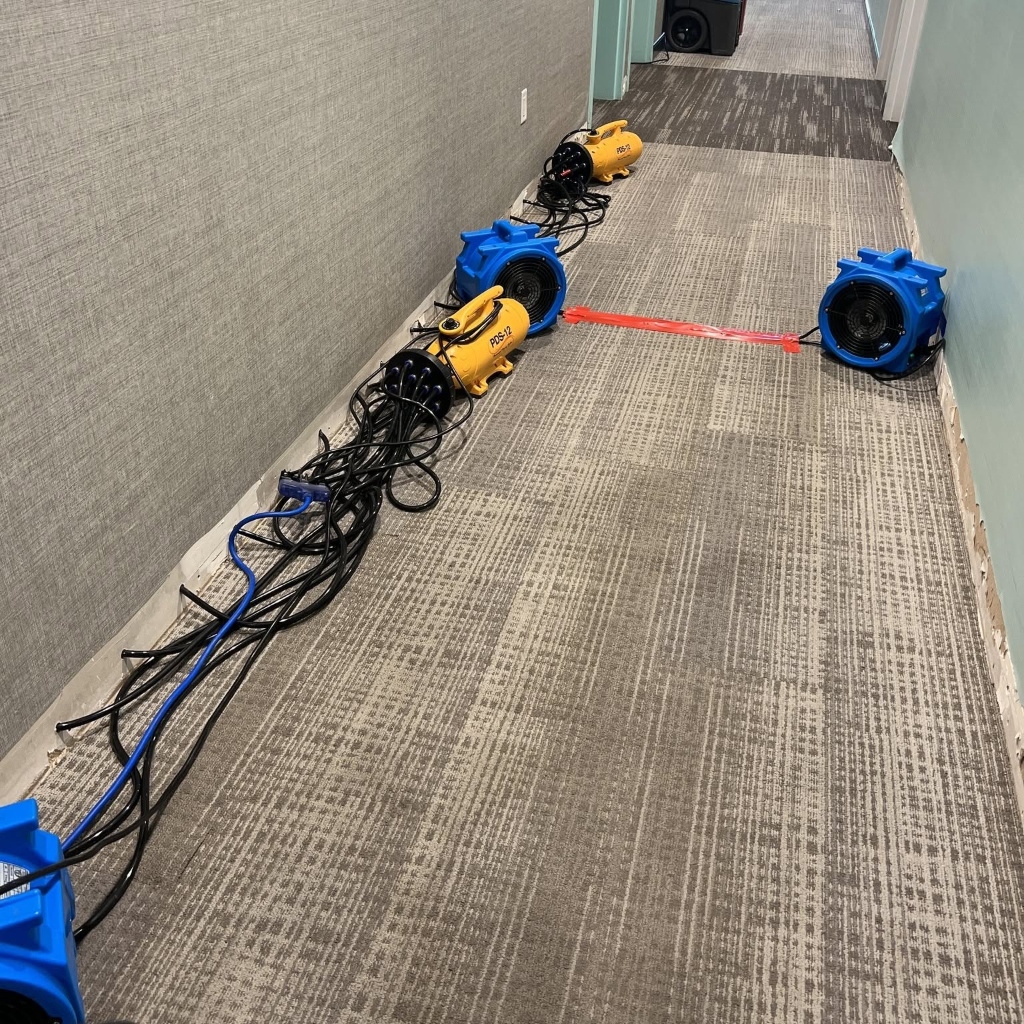
We deploy commercial Dri-Eaz Low-Grain Refrigerant dehumidifiers, desiccant drying units, and high-velocity axial air movers positioned at 45-degree angles to generate a continuous vortex of drying energy.
All exposed structural elements and subflooring are treated with hospital-grade, EPA-registered botanical antimicrobials (such as Benefect Decon 30) to eliminate bacteria, suppress mold spore viability, and neutralize odor.
We log final digital moisture readings against established dry baseline standards. Once 100% dry certification is issued, our licensed general contracting team restores drywall, flooring, paint, trim, and fixtures to flawless pre-loss condition.
We work directly with State Farm, Allstate, Farmers, USAA, Travelers, Liberty Mutual, Chubb, and all major commercial carriers. We prepare detailed Xactimate® line-item estimates with thermal imaging logs so your claim is approved quickly without hassle.
Every building material exhibits distinct physical density, cellular porosity, moisture absorption coefficients, and dimensional tolerance limits. Treating every flooded property with generic drying equipment inevitably results in cupped hardwood, cracked drywall, sagging ceilings, and permanent mold outbreaks. Our restoration engineers implement tailored salvage protocols for each building component:
Drywall consists of a calcium sulfate dihydrate (gypsum) core sandwiched between heavy organic paper liners. When exposed to liquid water, gypsum rapidly absorbs moisture, expanding and losing its internal structural cohesion. Furthermore, the organic paper liners provide the prime cellulose food source required for fungal growth.
Restoration Methodology: For Category 1 clean water losses addressed within 24 hours, our crews can often save drywall assemblies in place by removing baseboards, drilling 5/8-inch ventilation ports beneath the trim line, and introducing dry air directly into the stud cavity using forced-air cavity drying systems. However, if water has wicked above 12 inches, if Category 2 or 3 water is present, or if wet fiberglass insulation is trapped behind the drywall, our team performs a laser-guided horizontal flood cut (12 to 24 inches above the water mark). This allows complete removal of soaked insulation while preserving the integrity of the upper wall.
Natural hardwood is an anisotropic, hygroscopic cellular material. Wood cells absorb water molecules, expanding across the grain significantly more than along its length. When water seeps beneath a hardwood floor, the subfloor side absorbs moisture rapidly while the top polyurethane finish restricts surface evaporation. This moisture gradient creates severe mechanical stress, causing cupping (edges curling upward) or crowning (center bowing outward).
Restoration Methodology: Rather than tearing out tens of thousands of dollars worth of custom oak, walnut, or hickory flooring, we deploy high-vacuum rescue mat systems. These commercial mats are taped airtight across the floor surface and connected to high-vacuum blowers. The extreme negative pressure pulls trapped liquid water and high vapor pressure moisture directly through the joints and out of the subfloor. Once equilibrium moisture content (EMC) is restored (typically between 8% and 12%), the boards settle flat without requiring refinishing or replacement in over 85% of cases.
In modern Arizona residential construction, subfloors are primarily built with either traditional cross-laminated plywood or Oriented Strand Board (OSB). Plywood can tolerate multiple wetting and drying cycles with minimal permanent thickness swelling. OSB, conversely, is composed of wood flakes compressed with synthetic wax and resin adhesives. When water penetrates OSB edges, the wood flakes release their compaction tension, causing permanent swelling (edge flare) that cannot be sanded down without compromising structural shear ratings.
Restoration Methodology: We evaluate subfloors using insulated hammer-probe moisture meters driven directly to the core. If plywood is saturated, high-heat desiccant drying restores it to pre-loss moisture levels. If OSB displays significant edge swelling, structural delamination, or softening, our certified carpenters perform surgical section replacements, maintaining tongue-and-groove joint integrity so that finished flooring installations remain perfectly level and squeak-free.
While concrete appears to be a solid, non-porous rock, it is in reality a dense capillary network filled with microscopic pores and air voids. In the Phoenix metropolitan area, homes are constructed upon monolithic concrete slab-on-grade foundations poured over dense, calcium-carbonate-rich caliche desert soil. When an under-slab copper plumbing line develops a pinhole leak, pressurized hot water saturates the concrete slab from beneath over weeks or months.
Restoration Methodology: Water trapped inside concrete creates severe hydrostatic pressure, causing luxury vinyl plank (LVP) adhesive breakdown, porcelain tile debonding, and continuous moisture migration into bottom wall plates. Standard refrigerant dehumidifiers cannot dry concrete slabs because ambient desert air temperatures and low surface permeability require deep vapor depression. We deploy specialized commercial desiccant dehumidifiers that produce ultra-dry air (<10% RH, <15 GPP). This extreme vapor differential draws moisture out from the deep concrete capillary matrix until digital calcium chloride or relative humidity probe testing verifies baseline dryness.
Attic insulation behaves dramatically depending on whether it consists of fiberglass batts or blown-in cellulose:
Most kitchen and bathroom cabinet boxes are constructed from particleboard or medium-density fiberboard (MDF) faced with wood veneer or melamine laminate. When MDF absorbs water, it swells irreversibly, losing structural screw-holding capacity. However, luxury granite, quartz, or marble countertops make removing cabinets economically disastrous.
Restoration Methodology: Our technicians preserve high-value countertops and cabinetry by performing toe-kick cavity drying. We carefully pop off the exterior cosmetic toe-kick moldings and drill small, concealed 5/8-inch ventilation holes into the toe-kick plenum. We then attach high-pressure ducting to inject heated, super-dry air directly beneath the cabinet boxes while pulling moisture out through exhaust ports. This saves expensive custom cabinetry and natural stone countertops without requiring destructive demolition.
Arizona's unique desert environment, mineral-saturated tap water, and dramatic weather phenomena create severe, localized structural risks.
Phoenix municipal tap water features some of the highest calcium and magnesium mineral hardness ratings in the nation (often exceeding 15 to 25 grains per gallon). This extreme mineral scaling corrodes shut-off valves, degrades rubber gaskets, and creates stress fractures in braided stainless steel supply lines behind toilets, refrigerators, and washing machines. When these lines rupture under 70+ PSI line pressure while occupants are away, hundreds of gallons flood the home within hours.
Throughout Scottsdale, Paradise Valley, Mesa, and central Phoenix homes built in the 1970s through early 2000s, copper domestic water lines were routed directly through or beneath concrete foundation slabs. Chemical reactions with native desert soil, gravel friction during thermal expansion cycles, and hard water pitting cause microscopic pinholes. Homeowners frequently discover hot floor tiles, unexplained water bill increases, or moist carpet along hallway baseboards.
During the annual summer monsoon season (July through September), massive dust storms (haboobs) deposit thick layers of desert grit, leaves, and debris across southwestern Santa Fe-style flat roofs. When intense microbursts immediately follow, dumping up to two inches of rain in twenty minutes, roof drainage scuppers become clogged. Trapped water pools to critical depths, overflowing parapet flashings and collapsing ceiling drywall across entire residences.
During peak triple-digit Phoenix heatwaves, residential air conditioning systems operate continuously for 18 or more hours each day, producing up to 20 gallons of condensate water daily. Airborne desert dust and microbial algae rapidly clog the 3/4-inch PVC drain line. When secondary emergency drain pans crack from attic heat or fail to trigger float switches, gallons of water pour through ceiling drywall, destroying insulation and furnishings below.
In the majority of Phoenix residential builds, water heaters are installed in unconditioned garages where summer temperatures frequently exceed 130°F. Intense ambient heat combined with hard water sediment deposits accelerates galvanic corrosion and bottom-pan fatigue. When the tank ruptures, 50 to 75 gallons of scalding water immediately flood beneath shared drywall walls into adjacent kitchens, laundry rooms, and pantries.
Standard rubber laundry supply hoses remain under continuous municipal pressure. Over time, desert heat, pressure surges, and mechanical vibration weaken the rubber, causing sudden catastrophic splits. A ruptured washing machine hose discharges between 500 and 650 gallons of water per hour, inundating laundry rooms, hallways, and adjacent bedrooms before shutoff valves can be reached.
In older established neighborhoods across Phoenix, Tempe, and Glendale, mature desert landscape trees (ficus, eucalyptus, mesquite, and palm) aggressively seek moisture by penetrating aged vitrified clay or cast-iron sewer lines. Root masses catch solid waste, triggering catastrophic Category 3 black water sewer backups through bathtubs, floor drains, and toilets, requiring biohazard-level extraction.
In commercial warehouses, retail strip malls, and corporate office buildings throughout the Valley, accidental forklift impacts, equipment collisions, or defective thermal sprinkler heads discharge up to 60 gallons of black, stagnant, rust-saturated water per minute. Immediate commercial extraction and psychrometric drying are essential to safeguard inventory, server infrastructure, and business continuity.
Dealing with sudden water damage is an emotionally draining experience. Attempting to navigate the complexities of property insurance claim adjusters, technical line items, and strict documentation deadlines while your home is in disarray adds immense stress. Insurance carriers require detailed forensic proof, psychrometric moisture logs, thermal imaging verification, and itemized billing formatted according to strict industry standards before releasing funds. A single documentation omission can result in claim delays, lowball settlement offers, or wrongful denial based on "gradual damage" or "maintenance neglect" policy exclusions.
At Phoenix Water Damage Pros, we act as your dedicated restoration advocate. We work directly with your insurance carrier's adjusters from day one, providing transparent, indisputable scientific documentation that justifies every phase of emergency mitigation and structural reconstruction.
We prepare all estimates and billing using Xactimate, the universal estimating software utilized by 99% of insurance companies across North America. Every piece of equipment deployed, linear foot of baseboard removed, square yard of carpet extracted, and antimicrobial treatment applied is billed using real-time, pre-negotiated labor and material rates established specifically for Maricopa County. This eliminates arbitrary pricing disputes between our team and your insurance adjuster.
Phoenix Water Damage Pros (AZ ROC #342819) documents every mitigation project with forensic instruments. Below are genuine field telemetry logs, FLIR infrared thermograms, and engineered cavity drying systems deployed across residential and commercial properties throughout the Phoenix Valley.
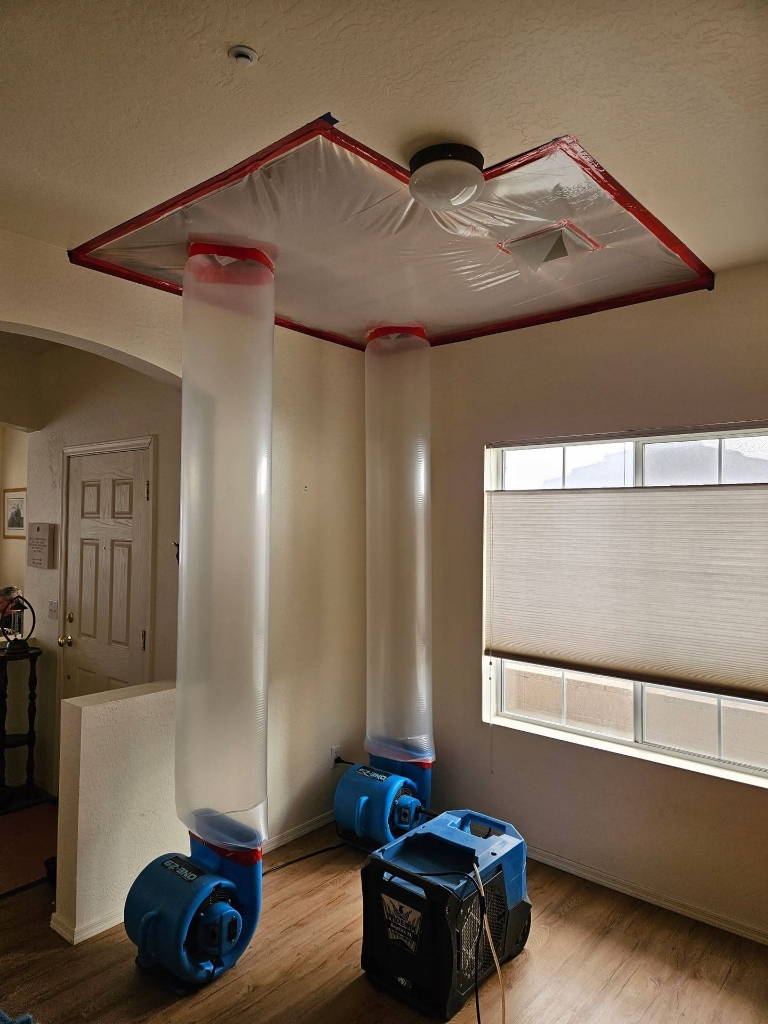 Phoenix, AZ
STRUCTURAL DRYING
Dual lay-flat pressurized ducting injecting dehumidified air into ceiling joists during Phoenix structural restoration.
 Phoenix, AZ
31.9% RH TELEMETRY
FLIR MR277 telemetry reading 31.9% RH, 75.1°F, and 41.05 GPP confirming aggressive target dry standard reached in Phoenix, AZ.
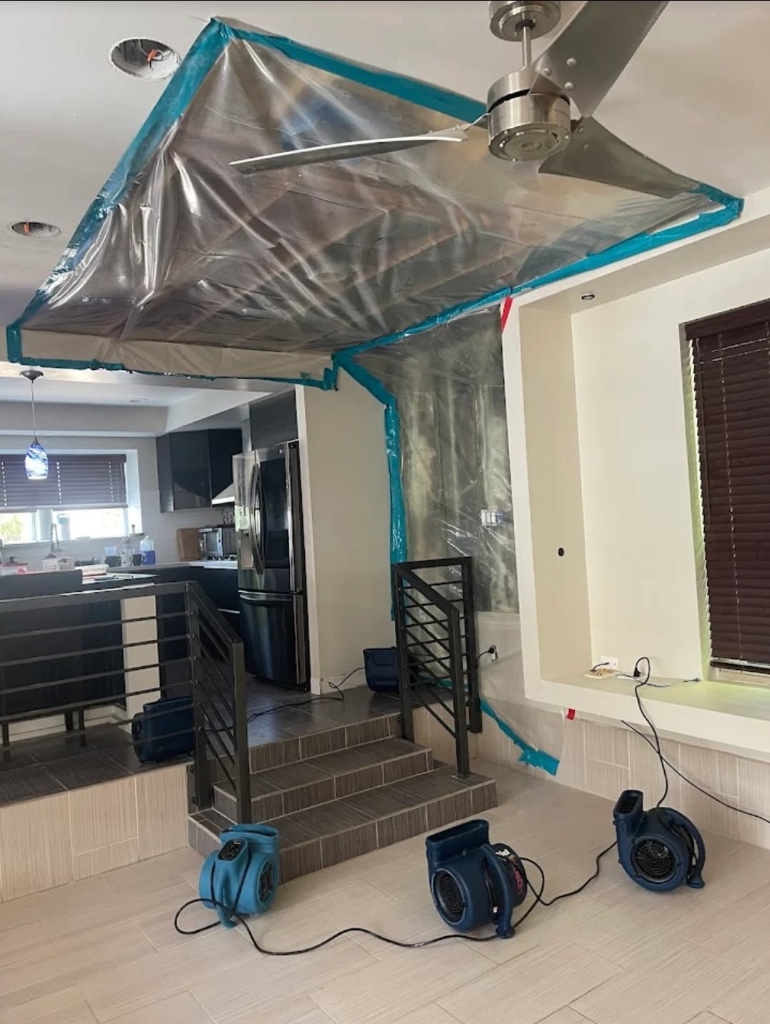 Scottsdale, AZ
LUXURY RESIDENCE
Negative air ceiling tenting drying overhead drywall above luxury porcelain tile in Scottsdale, AZ.
 Phoenix, AZ
83.7°F INFRARED
FLIR E6 thermal camera displaying 83.7°F cold moisture gradient pinpointing hidden plumbing leak behind drywall.
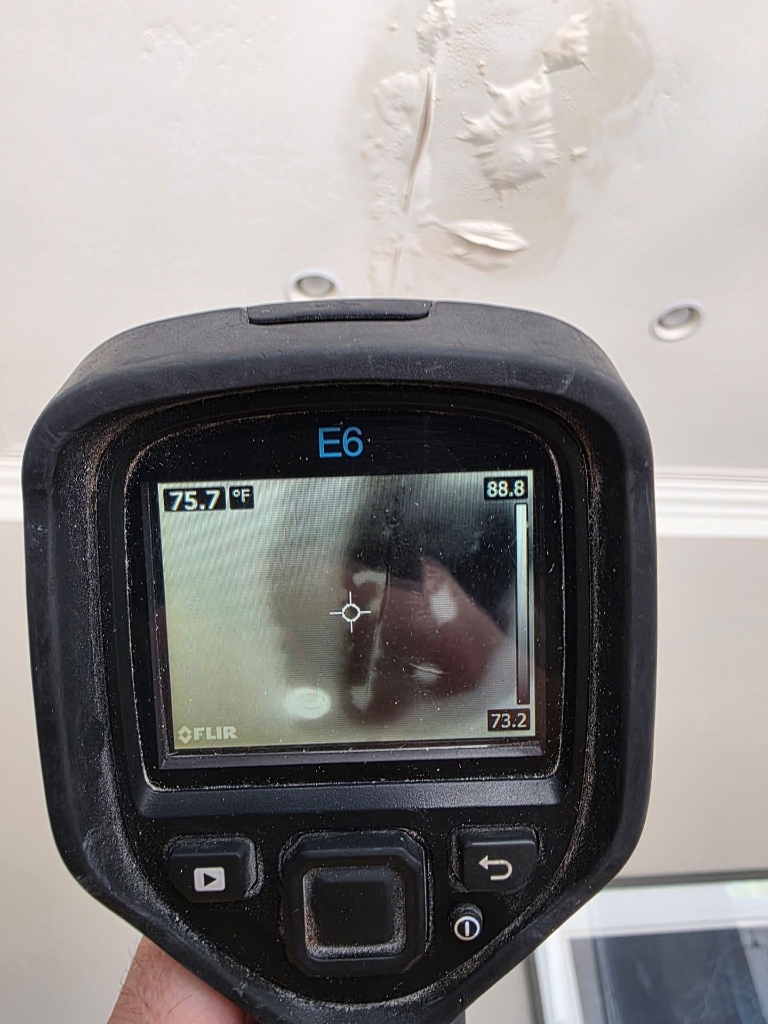
 Phoenix, AZ
75.7°F THERMOGRAM
Radiometric infrared thermal scan (75.7°F) mapping ceiling moisture plume boundaries prior to structural drying.
 Phoenix, AZ
COMMERCIAL MITIGATION
Large-scale commercial structural drying tunnel with LGR dehumidifiers and emergency fleet response in Phoenix, AZ.
 Phoenix, AZ
82.6% RH BASELINE
FLIR MR277 screen showing baseline ambient conditions of 82.6% RH, 71.5°F, and 95.48 GPP before industrial dehumidification.
 Phoenix, AZ
INDUSTRIAL THERMAL
FLIR C5 infrared camera scanning 40-ton commercial machinery for water intrusion and thermal gradients.
 Tempe, AZ
CABINET DRYING
Emergency kitchen cabinet flood cut drying and wall cavity desiccation with Phoenix DryMAX XL LGR dehumidifier in Tempe, AZ.
 Mesa, AZ
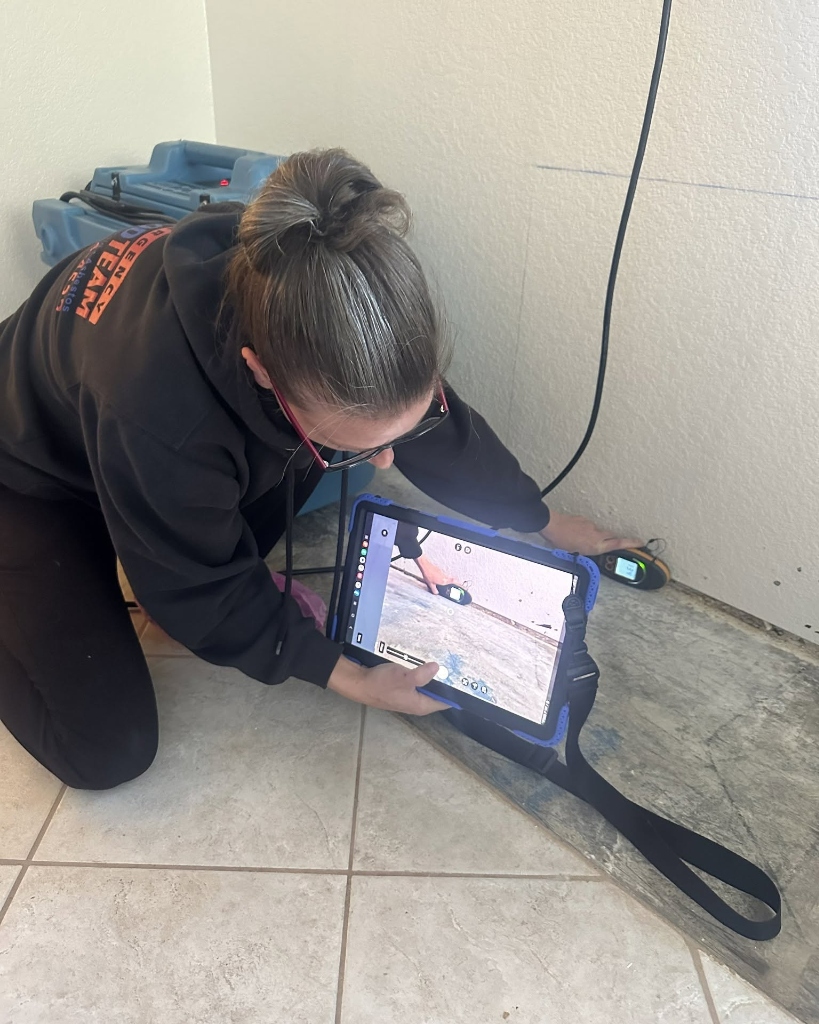
MOISTURE TELEMETRY
Certified technician conducting precision digital moisture mapping and thermal audit documentation for insurance in Mesa, AZ.
 Paradise Valley, AZ
ANTIMICROBIAL SPRAY
Electrostatic antimicrobial aerosol fogging treating lower wall framing cavities under kitchen cabinets in Paradise Valley, AZ.
 Tempe, AZ
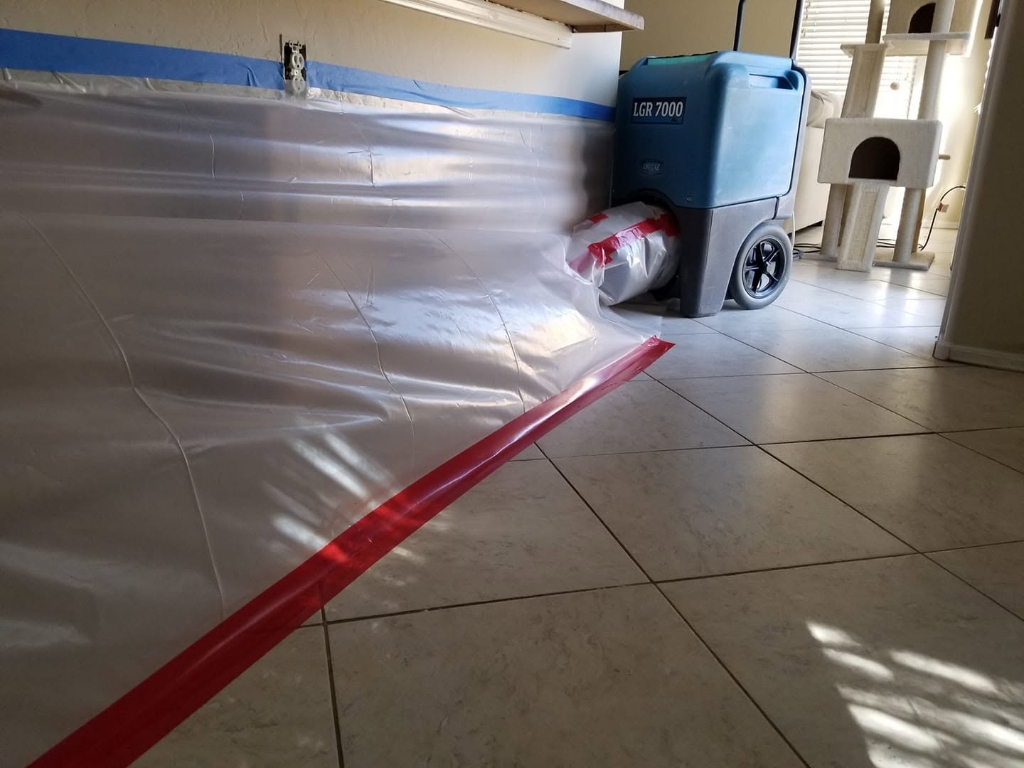
POSITIVE PRESSURE
High-capacity Dri-Eaz LGR 7000XLi dehumidifier injecting dry air directly into an inflated wall cavity containment chamber in Tempe, AZ.
 Phoenix, AZ
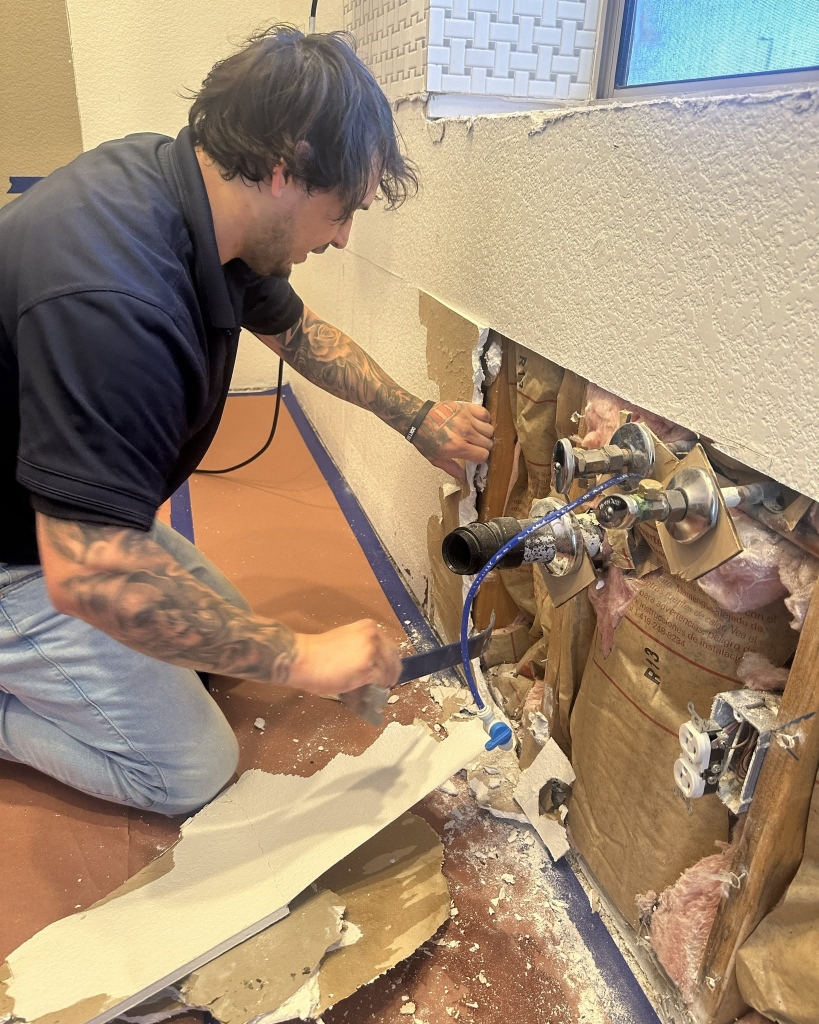
PRECISION FLOOD CUT
Precision drywall flood cut around active plumbing risers and electrical outlets during water mitigation in Phoenix, AZ.
 Chandler, AZ
FLOOR BUCKLING
Catastrophic hardwood floor warping and standing flood water extraction in large commercial recreation facility in Chandler, AZ.
 Gilbert, AZ
THERMAL AUDIT
Precision FLIR MR277 thermal moisture audit mapping exact saturation gradients and flood cut boundaries in Gilbert, AZ.
 Paradise Valley, AZ
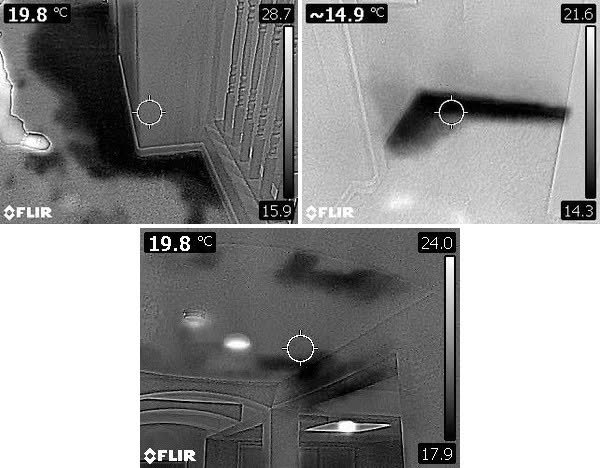
IR STAIR LEAK SCAN
Advanced infrared thermal imaging identifying hidden moisture pathways through ceilings and staircases in Paradise Valley, AZ.
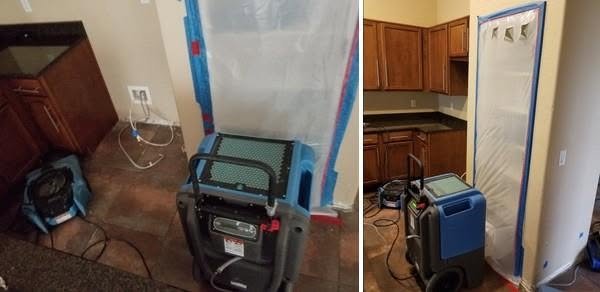 Phoenix, AZ
KITCHEN CONTAINMENT
Dual-chamber poly containment barrier isolating kitchen water damage drying from living areas in Phoenix, AZ.
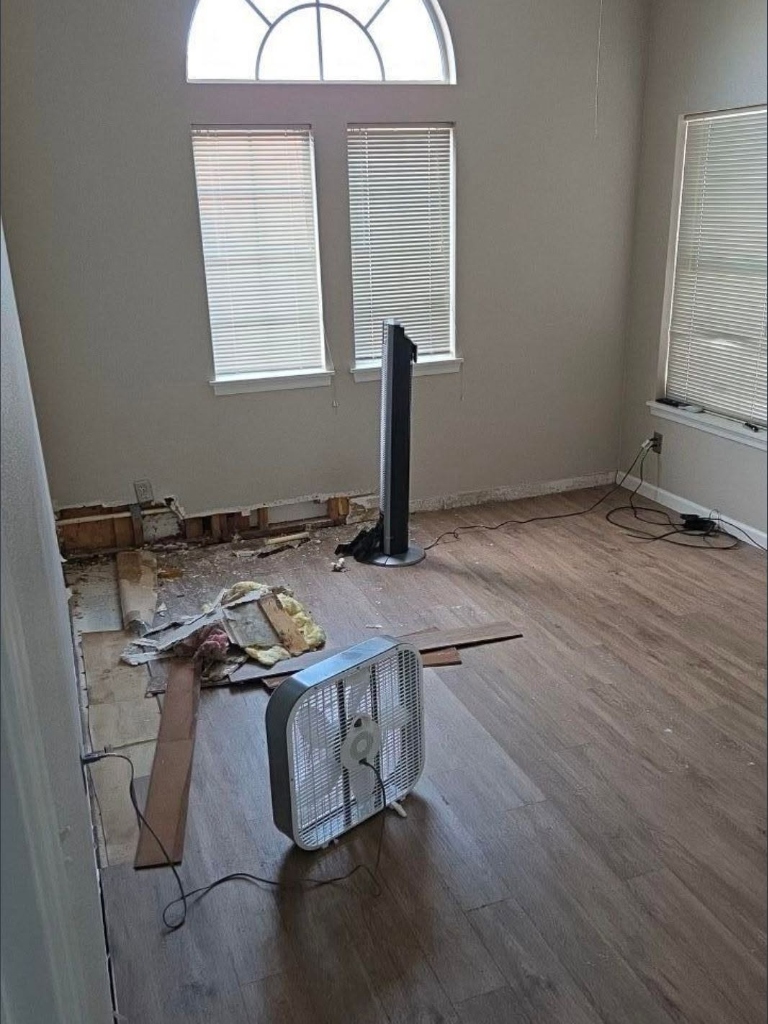 Mesa, AZ
LAMINATE TEAROUT
Surgical removal of buckled laminate flooring and subfloor moisture desiccation on concrete slab in Mesa, AZ.
 Scottsdale, AZ
JOIST DESICCATION
Subfloor joist desiccation utilizing directed turbulent airflow to eliminate trapped framing moisture in Scottsdale, AZ.
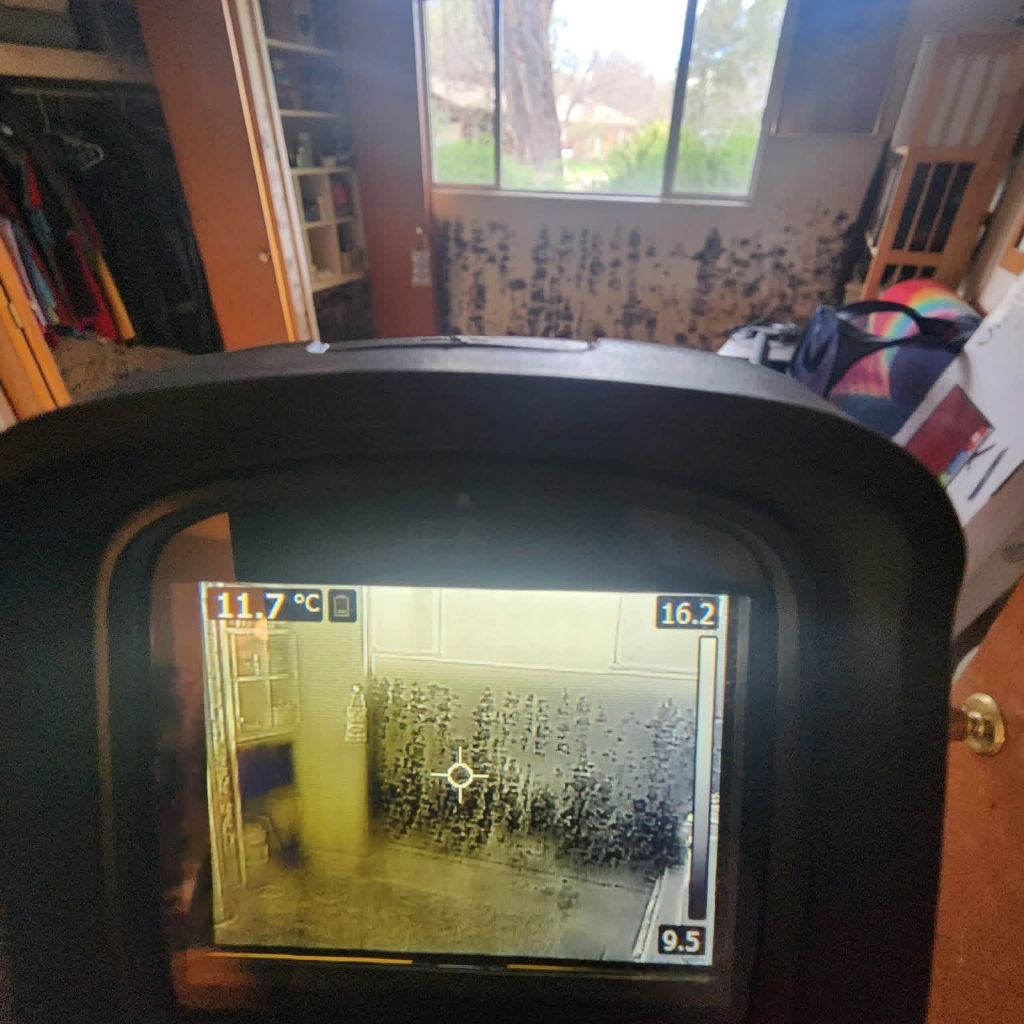 Phoenix, AZ
STUD CAVITY DRYING
Drywall flood cuts exposing wall framing to continuous dry air convection in Phoenix, AZ.
 Chandler, AZ
PINHOLE PIPE LEAK
Wall cavity inspection identifying pinhole copper pipe failure and saturated insulation in Chandler, AZ.
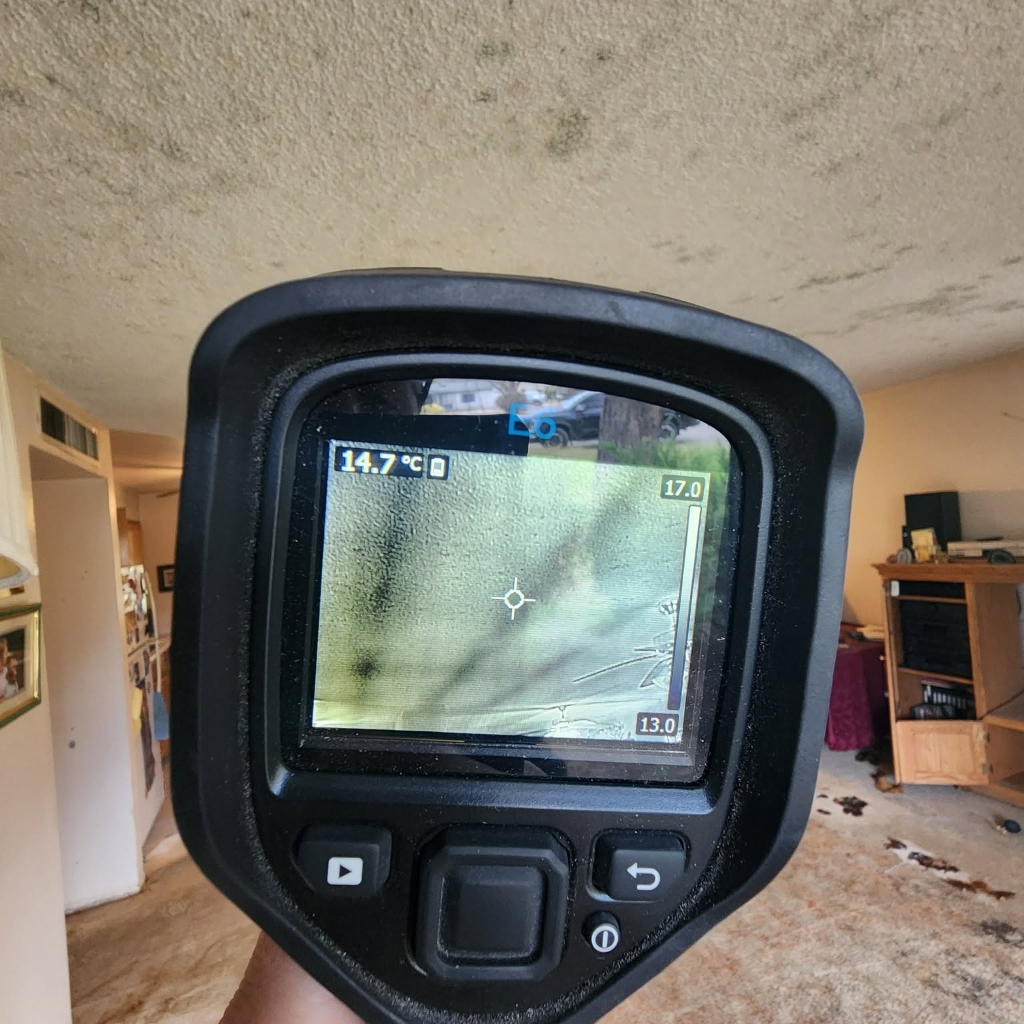 Tempe, AZ
DIGITAL AUDITING
IICRC certified technician conducting comprehensive structural moisture mapping in Tempe, AZ.
 Mesa, AZ
WALL CAVITY LEAK
Wall framing inspection revealing concealed plumbing line leak in Mesa, AZ.
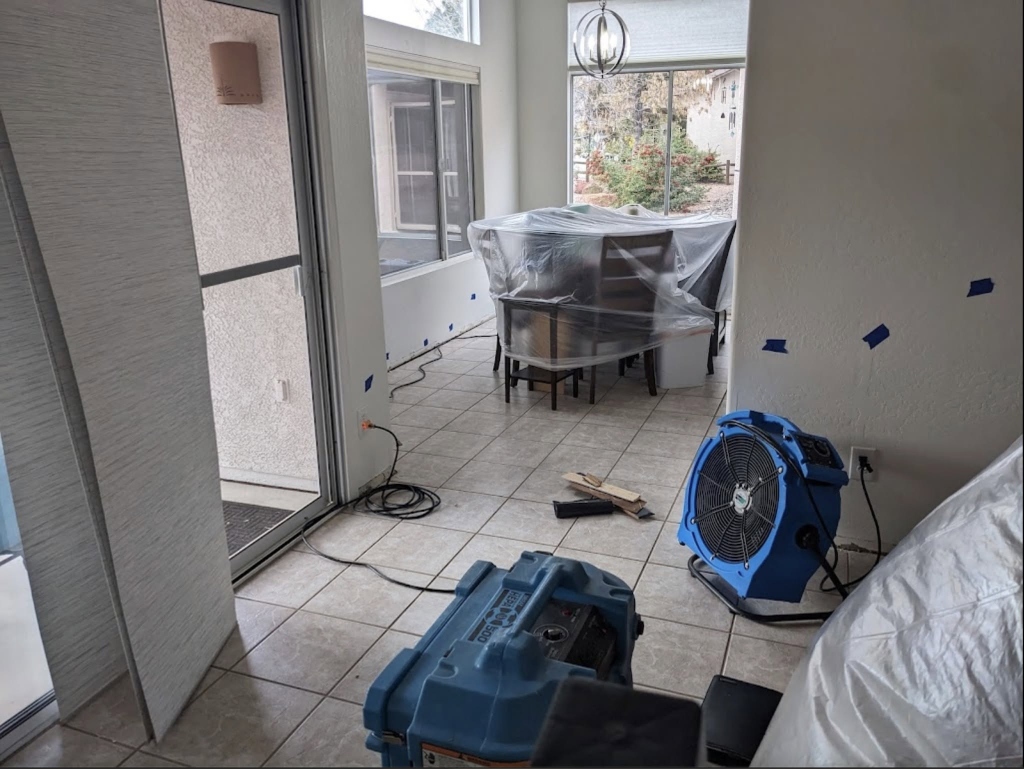 Chandler, AZ
SLAB TELEMETRY
Forensic moisture mapping telemetry logging concrete slab evaporation curves in Chandler, AZ.
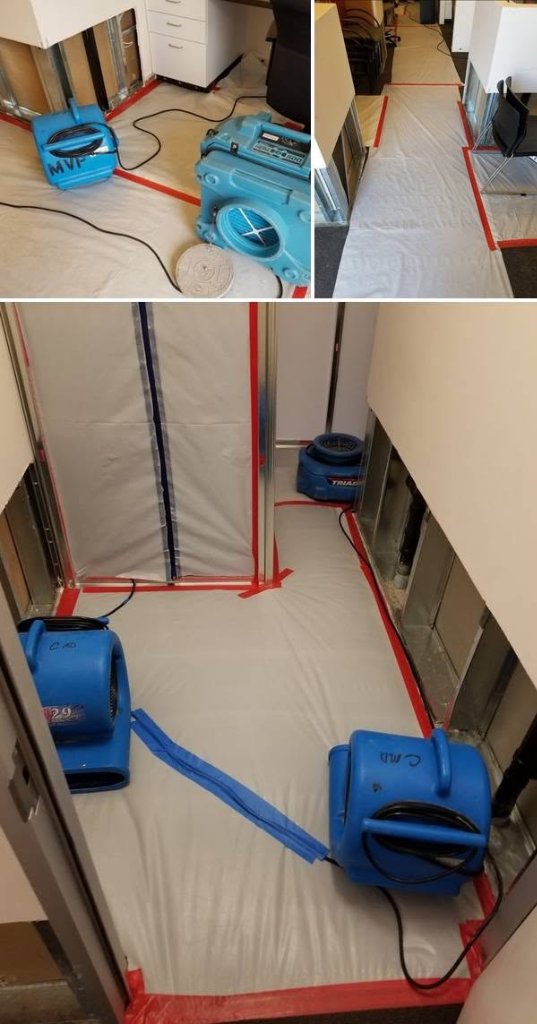 Chandler, AZ
COMMERCIAL MITIGATION
Commercial corporate office flood mitigation maintaining business continuity with protected runners and HEPA filtration in Chandler, AZ.
 Gilbert, AZ
HVAC CAVITY DRYING
Targeted containment chamber drying structural wall studs beneath return air ducting on concrete slab in Gilbert, AZ.
 Paradise Valley, AZ
23.1°C THERMAL SCAN
High-resolution thermal scan revealing cold evaporative anomaly and hidden water migration under closet carpet in Paradise Valley, AZ.
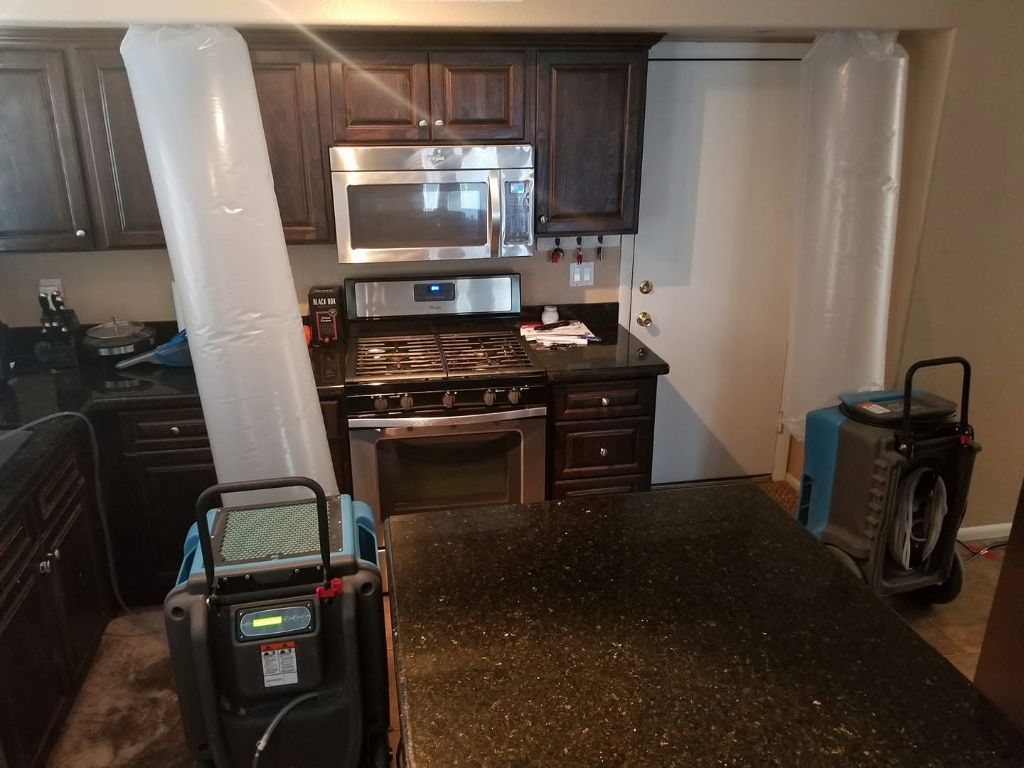 Phoenix, AZ
VERTICAL LAYFLAT DUCT
Advanced positive-pressure layflat ducting system drying upper soffits and kitchen cabinetry in Phoenix, AZ.
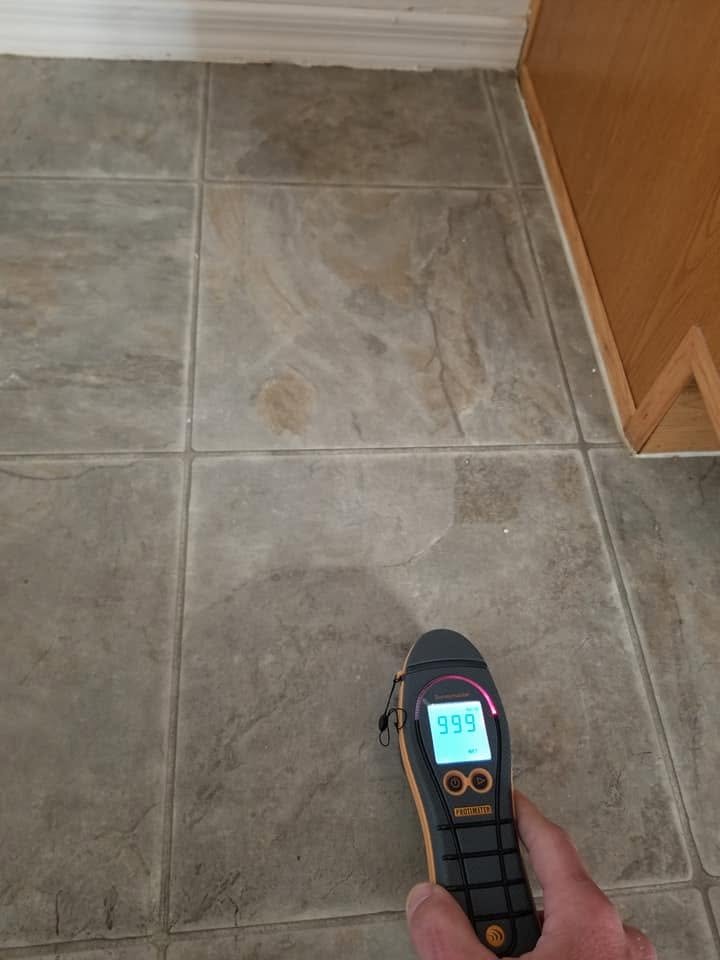 Scottsdale, AZ
999 MAX SATURATION
Non-invasive moisture meter reading 999 max saturation on kitchen tile subfloor following concealed slab leak in Scottsdale, AZ.
 Mesa, AZ
64.9°F CARPET SCAN
Infrared thermal verification identifying concealed moisture migration beneath carpet padding without lifting carpet in Mesa, AZ.
 Chandler, AZ
SUPPLY VALVE LEAK
Moisture audit measuring maximum 999 saturation on drywall surrounding failed washing machine shutoff valves in Chandler, AZ.
 Scottsdale, AZ
TANK BURST FAILURE
Rotted water heater platform and saturated concrete slab flooding after catastrophic water heater tank failure in Scottsdale, AZ.
 Phoenix, AZ
STAND RECONSTRUCTION
Precision reconstruction and drywall sealing of water heater pedestal platform following copper pipe supply leak in Phoenix, AZ.
We maintain emergency response vehicles on 24/7 standby throughout the entire Phoenix Valley. When an emergency water disaster strikes, our certified technicians arrive on-site within 30 to 60 minutes of your call. Rapid arrival allows us to extract standing water before it wicks deep into structural framing, concrete slabs, and drywall assemblies, preventing permanent structural failure and stopping toxic mold spores before germination begins.
In the vast majority of cases, yes. Standard homeowners insurance policies cover water damage provided the source is "sudden and accidental." Covered perils typically include ruptured domestic supply lines, burst water heater tanks, washing machine hose breaks, dishwasher line failures, and overhead pipe leaks. Standard policies typically exclude gradual, continuous leaks that persisted unnoticed for months, or outdoor rising surface floodwaters from monsoon storms (which require a separate FEMA National Flood Insurance policy). We review your policy terms with you and communicate directly with your insurance adjuster to advocate for full coverage.
Under professional IICRC S500 protocols, typical structural drying requires between 3 and 5 days. Dense building assemblies such as solid hardwood flooring, concrete foundation slabs, plaster walls, or double-layer drywall assemblies may require 5 to 7 days of specialized desiccant dehumidification. We never guess when drying is complete; our technicians take daily digital moisture readings using pin and pinless meters, removing drying equipment only when your materials reach predetermined dry equilibrium baseline standards.
In minor Class 1 clean water losses affecting a single enclosed room, homeowners can often remain safely and comfortably in the home. However, in extensive Class 2 or Class 3 losses involving multiple rooms, industrial axial air movers and LGR dehumidifiers generate significant noise, heat, and air movement. If Category 3 black water or sewage is involved, health regulations mandate evacuation until containment, controlled demolition, and antimicrobial decontamination are completed. If temporary relocation is necessary, your insurance policy's Additional Living Expenses (ALE) coverage generally covers hotel accommodation and dining expenses.
Salvageability depends on the water category and elapsed time. If the water was Category 1 clean water and extraction begins within 24 to 48 hours, high-quality synthetic carpeting can almost always be saved through extraction, antimicrobial treatment, and subsurface drying. However, the foam or bonded urethane carpet pad underneath is inexpensive, acts like an open-cell sponge, and traps water against the subfloor; replacing the pad while salvaging the carpet is standard industry best practice. If the water is Category 2 grey water or Category 3 black water, both carpet and pad must be immediately removed and safely disposed of per IICRC safety regulations.
Consumer-grade box fans merely circulate ambient air without extracting moisture from the environment. As water evaporates from floor surfaces into room air, relative humidity quickly surges to 90%+, turning the room into a tropical greenhouse. The suspended moisture then condenses on cooler windows, ceiling drywall, and behind cabinets in unaffected rooms, triggering severe secondary mold outbreaks. Professional restoration requires balanced low-grain refrigerant dehumidification to pull moisture out of the air, high-volume extraction, and calibrated moisture meters to verify that structural framing studs are genuinely dry.
We utilize non-destructive diagnostic instruments including high-resolution FLIR infrared thermal imaging cameras, non-invasive radio-frequency moisture meters, and calibrated deep-penetration resistance hammer probes. Evaporating water absorbs heat, creating a distinctive thermal cooling signature that appears clearly on infrared scans. This allows us to map the precise boundaries of moisture trapped inside wall cavities, under luxury vinyl plank, and beneath ceramic tile without punching exploratory holes or causing cosmetic damage.
A flood cut is a clean, level horizontal incision made across drywall, typically 12 to 24 inches above the highest water saturation line. Flood cuts are necessary when water has saturated wall cavities containing fiberglass insulation, or when Category 2 or 3 water has entered the wall. Removing the lower section allows wet, mold-prone insulation to be discarded and provides direct air circulation to wet structural framing studs. Because our technicians use laser levels and precision multi-tools, our reconstruction drywall specialists can easily hang, tape, texture, and paint a seamless patch during the repair phase.
Microscopic mold spores are naturally present in low concentrations in indoor and outdoor air everywhere. To colonize and multiply, they require three conditions: moisture, an organic cellulose food source (such as drywall paper, wood framing, or dust), and warm temperatures (above 70°F). If standing water is extracted immediately and structural components are dried to safe baseline levels within 24 to 48 hours, mold spores cannot establish a viable colony. However, if moisture persists beyond 48 hours in Arizona's warm climate, microbial colonization is virtually inevitable.
First, protect life and safety: if water is deep or near electrical outlets, shut off the main circuit breaker at your service panel, and shut off your property's main water shut-off valve to halt incoming flow. Second, avoid walking through standing water if you suspect sewage contamination. Third, remove valuable paper documents, family heirlooms, small electronics, and delicate area rugs to a dry area. Fourth, place squares of aluminum foil or plastic wrap under wooden furniture legs resting on wet carpeting to prevent furniture wood stain from bleeding into the carpet fibers. Do not use a household vacuum cleaner to suck up water, as this creates a severe electrocution hazard.
A slab leak occurs when pressurized copper water lines installed beneath your home's concrete foundation develop pinhole ruptures due to soil friction, chemical corrosion, or electrolysis. Common warning signs include an unexplained warm spot on tile or carpet, the sound of running water when all faucets are closed, sudden dampness or efflorescence along interior baseboards, or an unexplained spike in your monthly municipal water bill. Our leak detection partners locate the precise rupture point so the pipe can be rerouted or repaired with minimal concrete demolition.
Yes. Phoenix Water Damage Pros is a fully licensed, bonded, and insured Arizona general contractor (ROC #342819). While ordinary extraction companies only perform demolition and leave you with exposed studs and missing flooring, we handle the entire project from initial emergency extraction through complete finish carpentry, drywall hanging, custom texture matching, interior painting, baseboard installation, and flooring replacement. You work with one dedicated project manager from beginning to end.
An antimicrobial is an EPA-registered solution designed to suppress, inhibit, or destroy harmful microorganisms, bacteria, and fungal spores on structural building materials. We prioritize hospital-grade botanical antimicrobials (such as Benefect Decon 30), which are formulated from natural plant essential oils (thyme extract). These botanical solutions achieve a 99.99% kill rate against pathogenic microorganisms without toxic synthetic chemicals, harsh fumes, or hazardous off-gassing, making them completely safe for children, pets, and chemically sensitive individuals.
Equilibrium Moisture Content (EMC) is the natural moisture balance that porous building materials achieve when exposed to normal indoor temperature and relative humidity. In the Phoenix desert climate, the normal EMC for structural framing lumber typically ranges between 8% and 12%, while gypsum drywall normally reads below 1% to 2% on specialized moisture meters. At the beginning of every project, we establish a baseline by measuring dry materials in an unaffected room. We continue daily psychrometric drying until all wet materials match this verified baseline dry standard.
Our certified master restoration crews are standing by 24/7/365 with truck-mounted vacuum extractors, LGR dehumidifiers, and thermal imaging cameras. Arriving in 60 minutes or less anywhere in Maricopa County.
The actions you take in the first 30 minutes following a water disaster can dramatically alter the outcome of your restoration project, safeguarding human health and preventing thousands of dollars in secondary structural damage.